
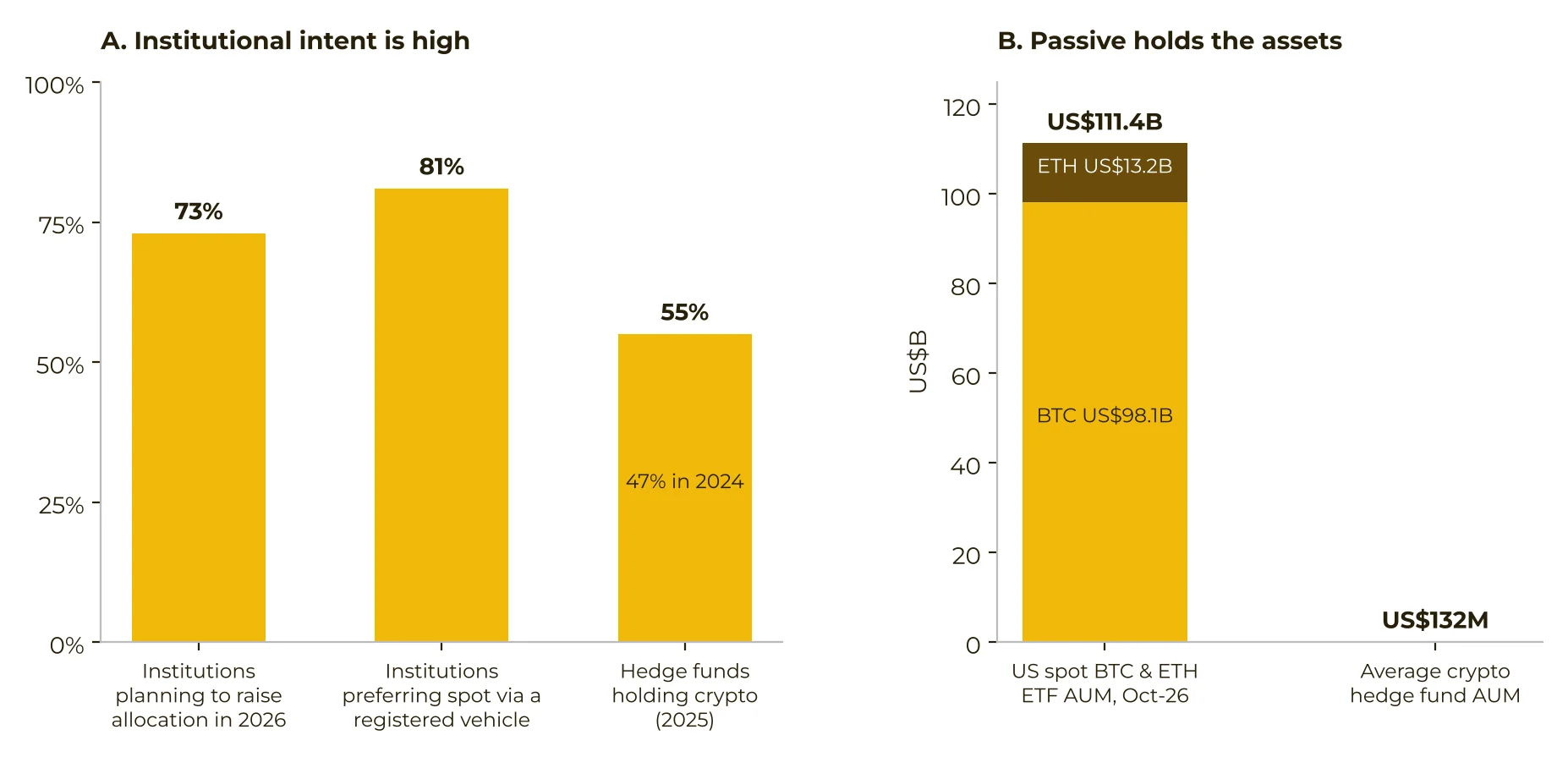
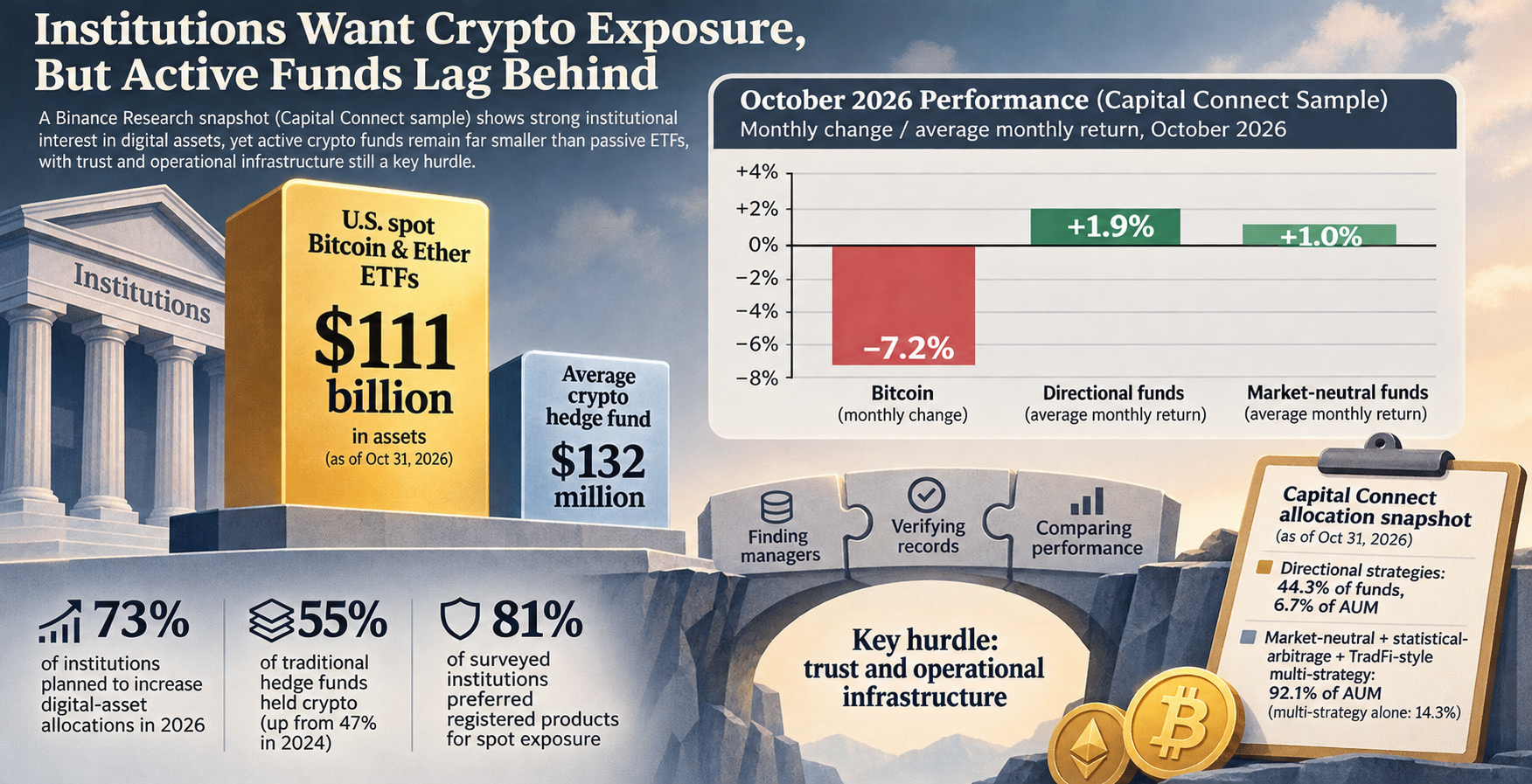
As of October 31, 2026, U.S. spot Bitcoin and Ether ETFs held about $111 billion in assets, while the average crypto hedge fund managed $132 million, according to a Binance Research report. The report’s central question was not whether institutions wanted digital-asset exposure, but why active funds had struggled to attract capital at the same scale as passive products.
This is a historical snapshot, reported in the original article on November 11, 2026, at 20:29 UTC+8. Its fund-level findings describe Binance’s Capital Connect platform, not the entire active crypto-fund market.
Demand for exposure, but a gap in access
Binance Research cited a 2026 EY-Parthenon and Coinbase survey in which 73% of institutions planned to increase digital-asset allocations that year. It also cited AIMA and PwC figures showing that 55% of traditional hedge funds held crypto assets, up from 47% in 2024. Yet 81% of surveyed institutions preferred registered products for spot exposure. Among crypto hedge funds, 91% managed less than $1 billion.
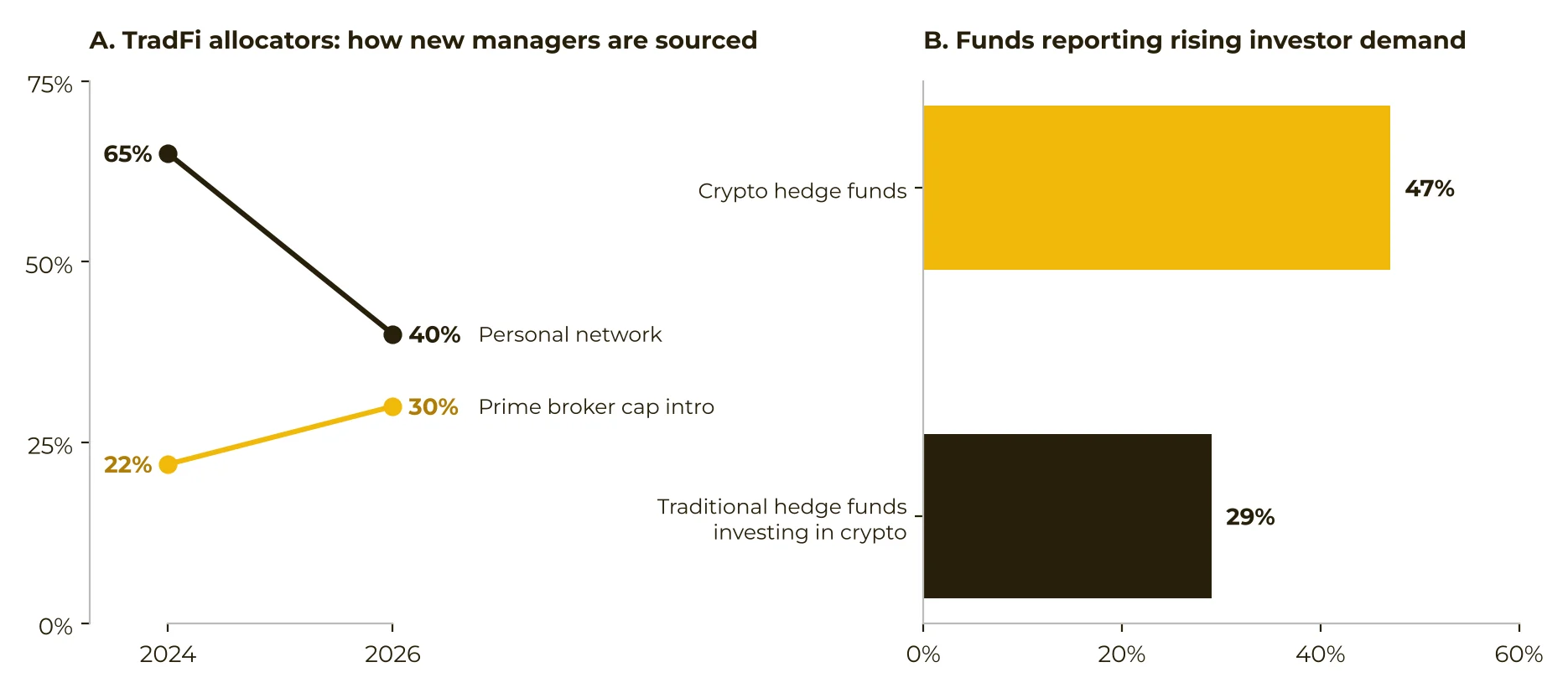
The researchers argued that ETFs benefited from familiar institutional arrangements for custody, audits, daily valuation and reporting. In their view, active funds lacked comparable infrastructure for finding managers, verifying records and comparing performance. That is the report’s explanation for the gap—not proof that distribution alone caused it.
What Capital Connect’s allocations showed
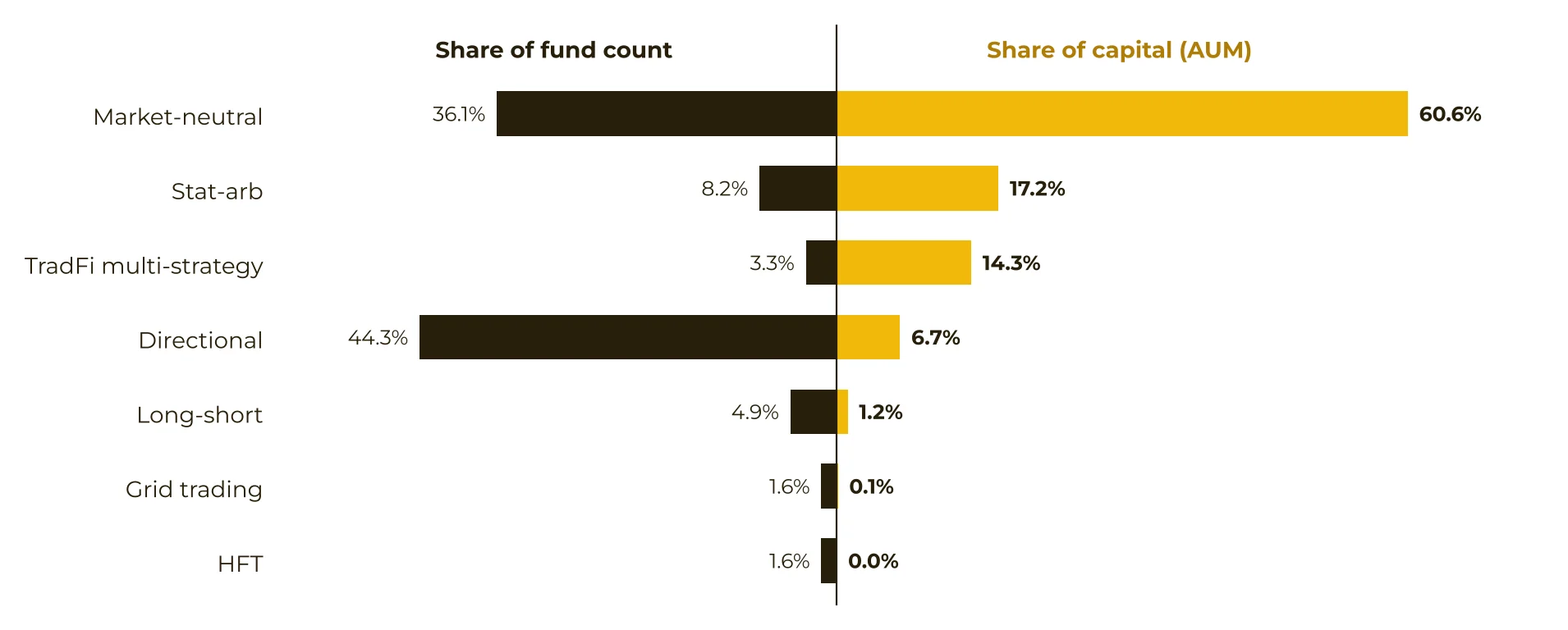
Directional strategies accounted for 44.3% of funds on Capital Connect but 6.7% of its assets under management. Market-neutral, statistical-arbitrage and traditional-finance-style multi-strategy funds together held 92.1% of platform assets; multi-strategy funds alone held 14.3%. The average investment in the first group of hedged strategies was roughly 11 times that in directional strategies, according to the report.
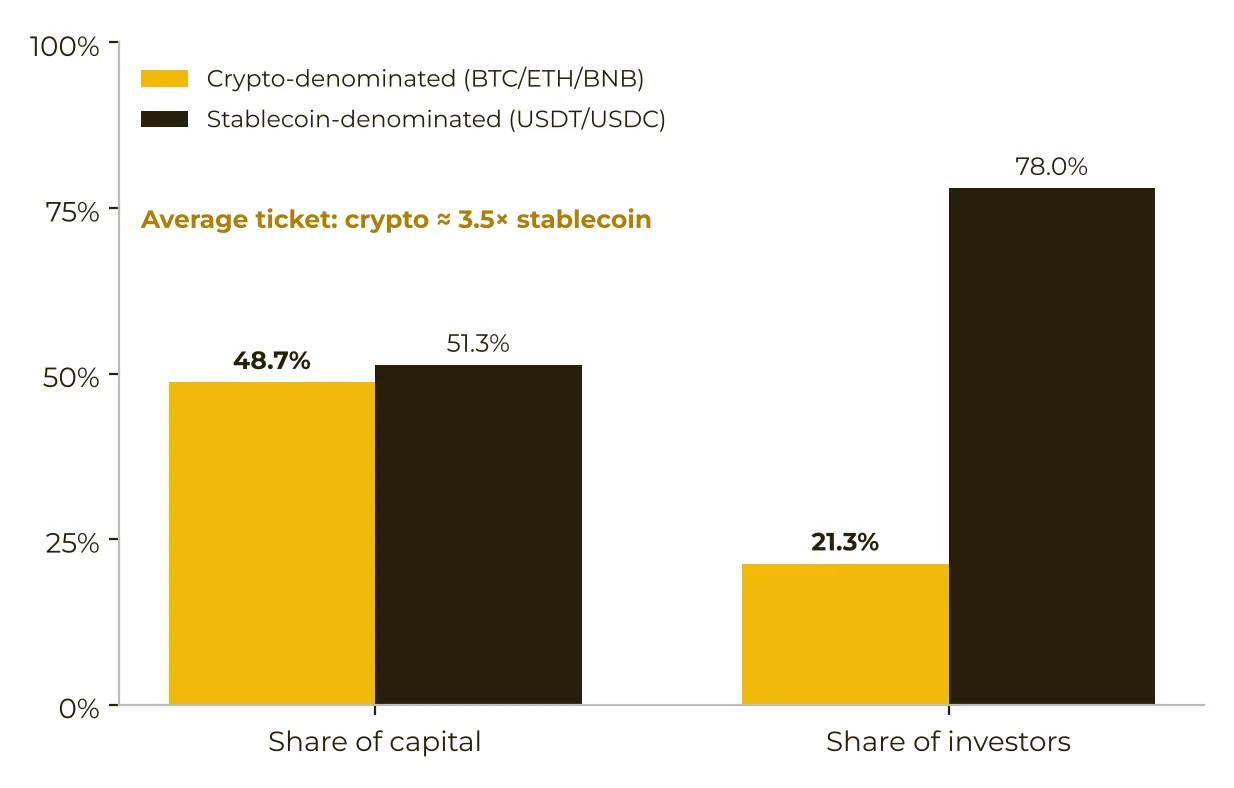
Funds denominated in BTC, ETH or BNB held 48.7% of platform assets and attracted about one-fifth of its investors. Their average investment was roughly 3.5 times that of stablecoin-denominated funds. Binance Research said the funds’ crypto holdings remained steady in October, while their dollar-denominated assets under management fell largely alongside BTC’s price. In the traditional-finance-style multi-strategy category, investor participation fell from 21 to 18 during the month.
October’s decline did not erase the performance gap
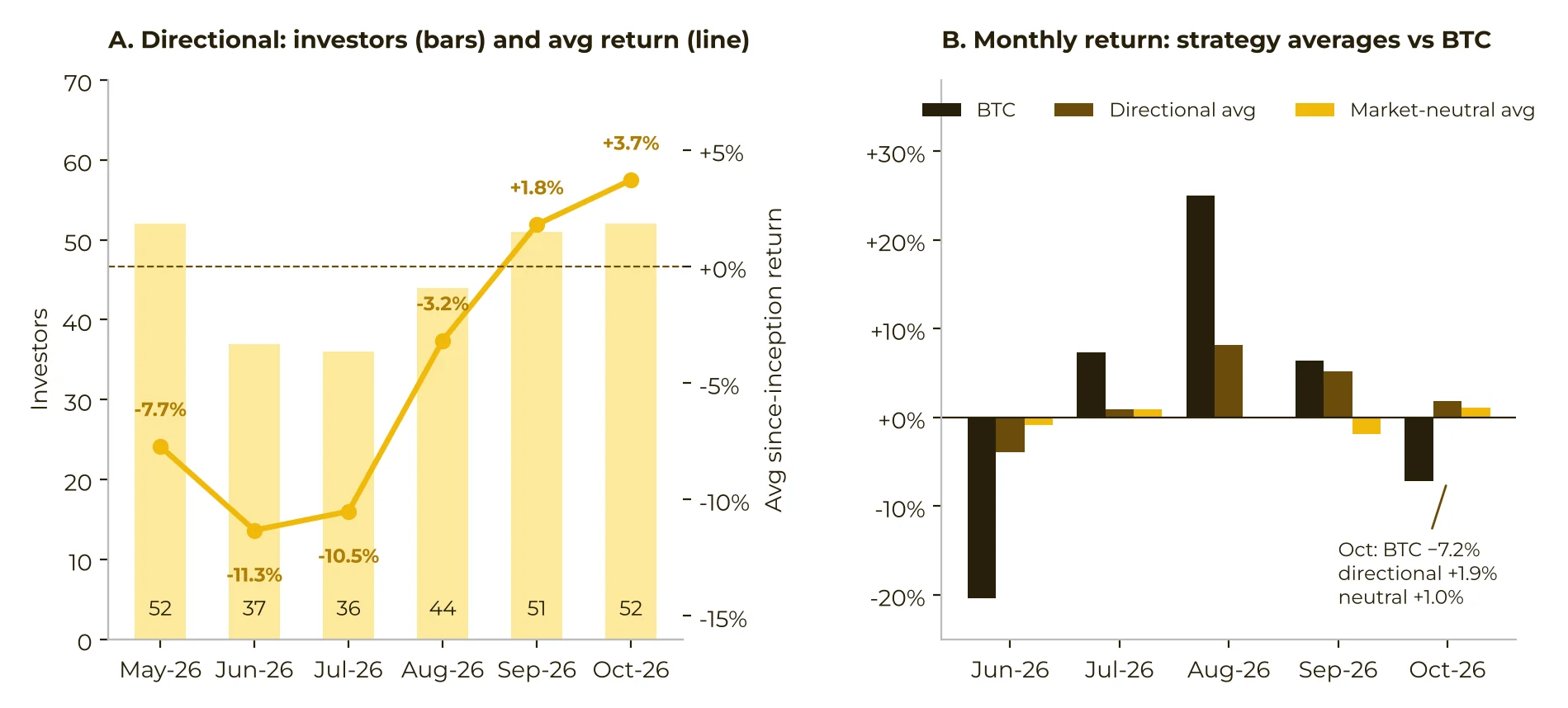
Bitcoin fell 7.2% in October 2026, but directional funds on the platform returned 1.9% on average for the month; market-neutral funds averaged 1.0%. Directional-fund investor participation recovered from a July low of 36 to 52 in October, matching its May level. Their average return since inception improved from −11% in June to +3.7% in October.
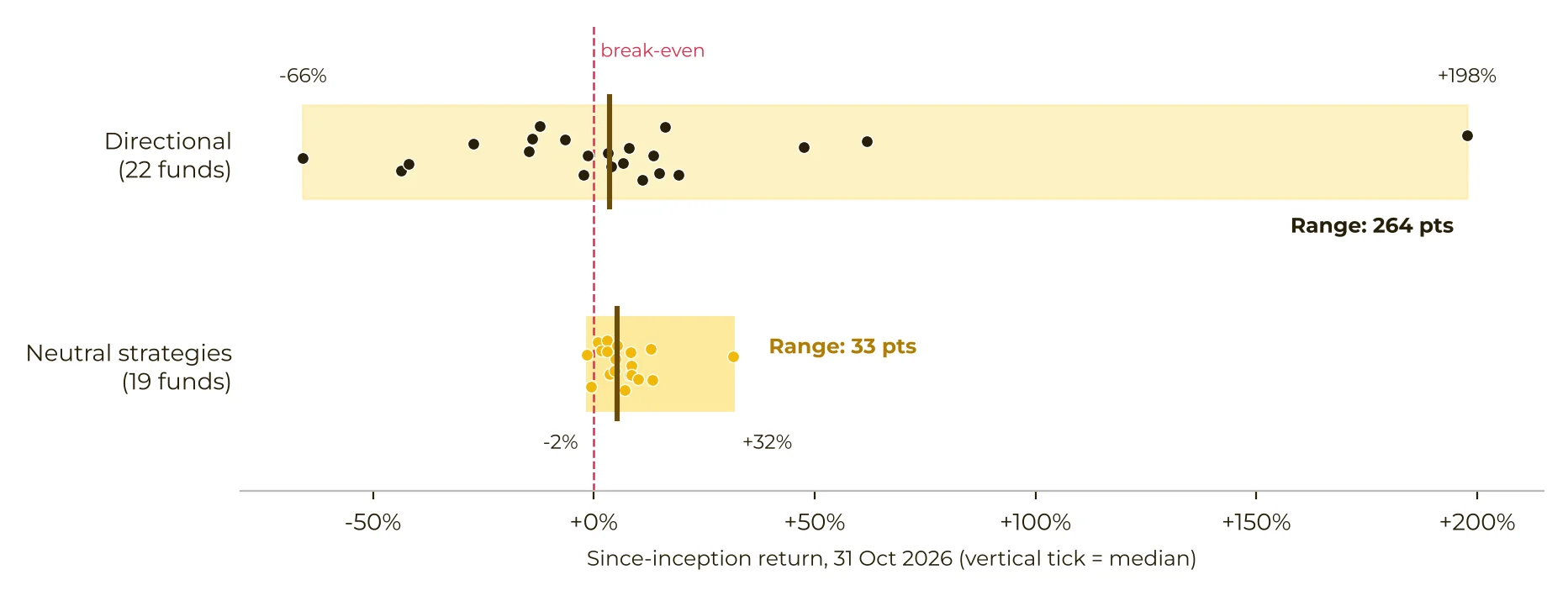
Those averages conceal substantial variation. Binance Research reported that only 55% of directional funds had positive returns, versus nine in ten neutral-strategy funds. The spread between the best and worst directional funds was about eight times that of neutral strategies. The top quartile of directional funds averaged a 69% return since inception, but that result does not describe the typical fund.
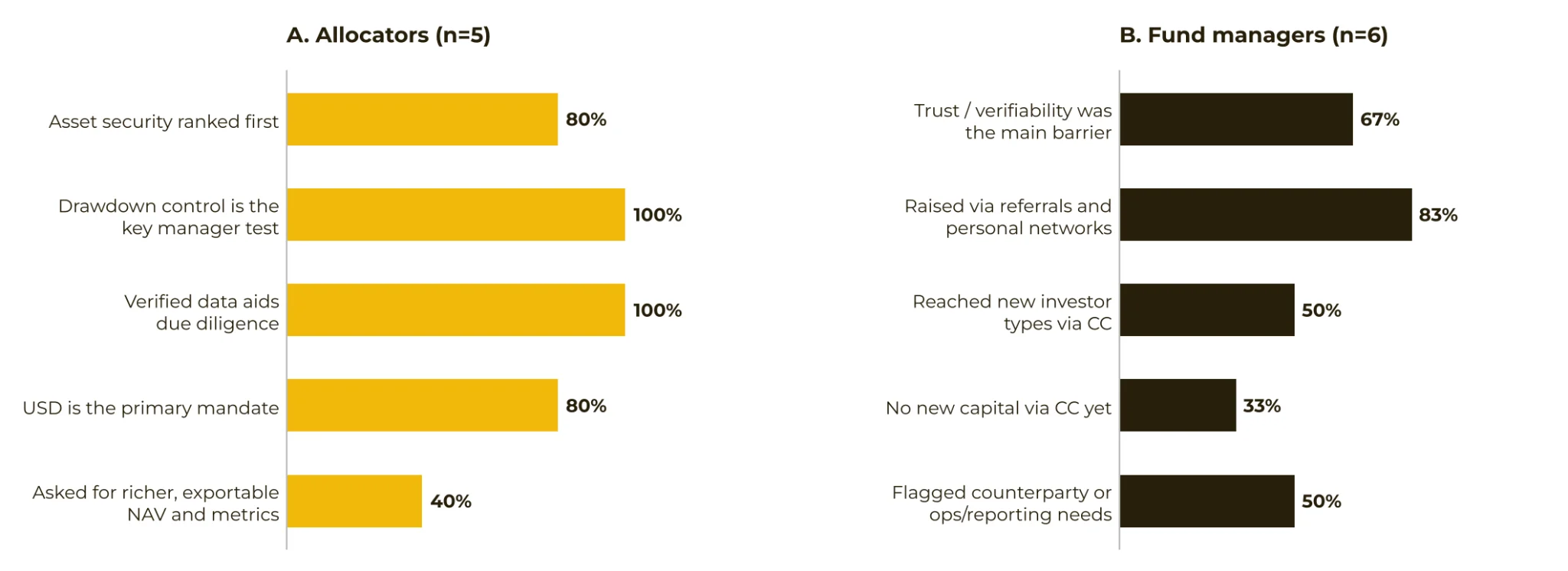
In interviews conducted from October 29 to November 1, 2026, 80% of the Capital Connect allocators interviewed ranked asset safety first. The report said all interviewed allocators considered verified exchange data useful for due diligence. Managers, meanwhile, described difficulty verifying track records and navigating KYC, anti-money-laundering and counterparty checks. These interviews support the report’s account of trust and operational barriers; they do not establish that any particular active strategy will attract funding or outperform.
Source: panewslab.com (originally published 2026-11-11 20:29 UTC+8)