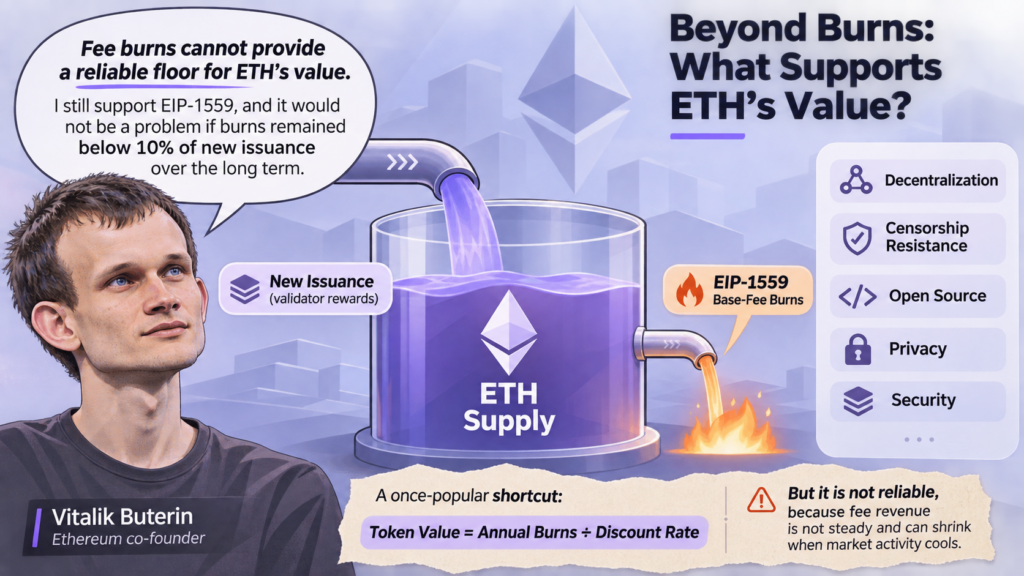
On November 8, 2026, Vitalik Buterin revisited a question behind ETH’s “ultrasound money” narrative: can fee burns provide a reliable floor for the token’s value? In a post on X, he argued that they cannot. Much of the fee revenue that drove past burns came from speculation within crypto markets, he said, and can shrink when that activity cools.
Buterin still supports EIP-1559. He said it would not be a problem if burns remained below 10% of new ETH issuance over the long term; pursuing higher fees just to increase burns could instead harm Ethereum’s decentralization and development. That shifts attention from a simple more activity, more burns story to a harder question: what supports a network token’s value when issuance continues but fees fall?
Supply changes differ across networks
The comparisons in Odaily’s November 11, 2026 report show why burn totals alone cannot answer that question:
- BTC has a supply cap of roughly 21 million and a block reward of 3.125 BTC. At an average of one block every ten minutes, the report estimated about 164,300 new BTC a year and annual supply inflation of roughly 0.82%.
- ETH supply had grown about 1.37% in total since the 2022 Merge, according to the report. But over the preceding 30 days, EIP-1559 burns offset only about 3.2% of new issuance, amid wider L2 use and lower gas fees.
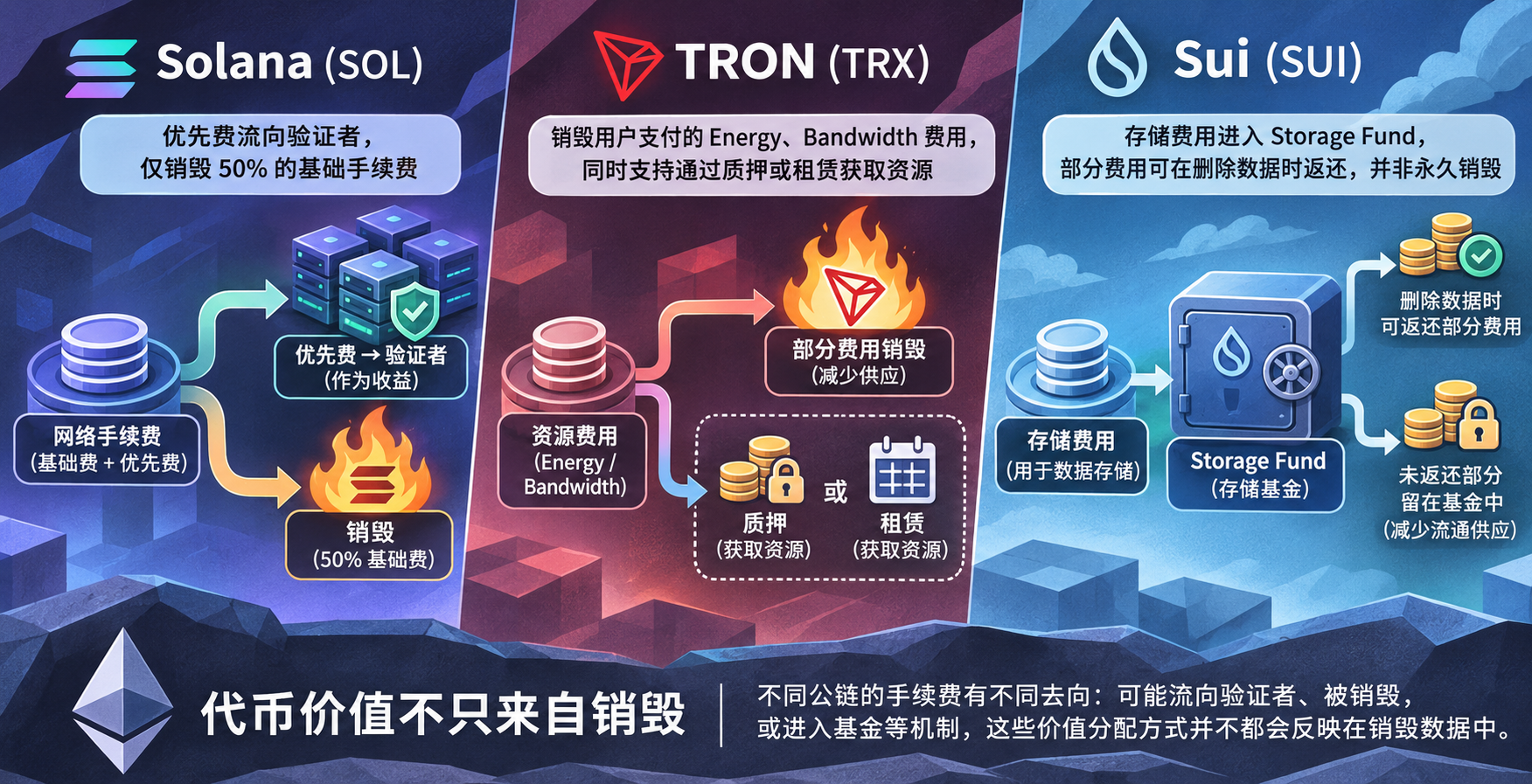
- SOL follows an inflation schedule that began at 8% annually, declines by 15% each year and targets 1.5% over the long term. During the 2024 meme-token boom, daily burns at one point exceeded 10,000 SOL; in January 2025, burns offset about 23% of issuance. After SIMD-0096 directed all priority fees to validators while retaining a burn of 50% of base fees, daily burns at one point fell to about 700 SOL.
- BNB does not rely on continuing issuance. Quarterly Auto-Burns and BEP-95 fee burns reduce supply toward a target of 100 million BNB. The report put the first four quarterly burns of 2026 at about 6.2 million BNB combined.
- TRX is issued as block rewards, while fees paid for Energy and Bandwidth resources are burned. Users can also obtain those resources by staking or renting them, so more USDT transfers do not necessarily mean a matching rise in TRX burns.
- AVAX has a 720 million supply cap and issues tokens as validator rewards while burning fees on its X, C and P chains. By early November 2026, the report said about 474 million AVAX had been minted, including roughly 114 million in staking rewards, while cumulative burns of about 5.18 million had not offset issuance.
- SUI has a fixed total supply of 10 billion; circulating supply grows chiefly through unlocks. Its Storage Fund locks some storage fees, but funds returned when data is deleted—and amounts retained in the fund—should not be confused with permanent token burns.
The limit of a burn-based valuation
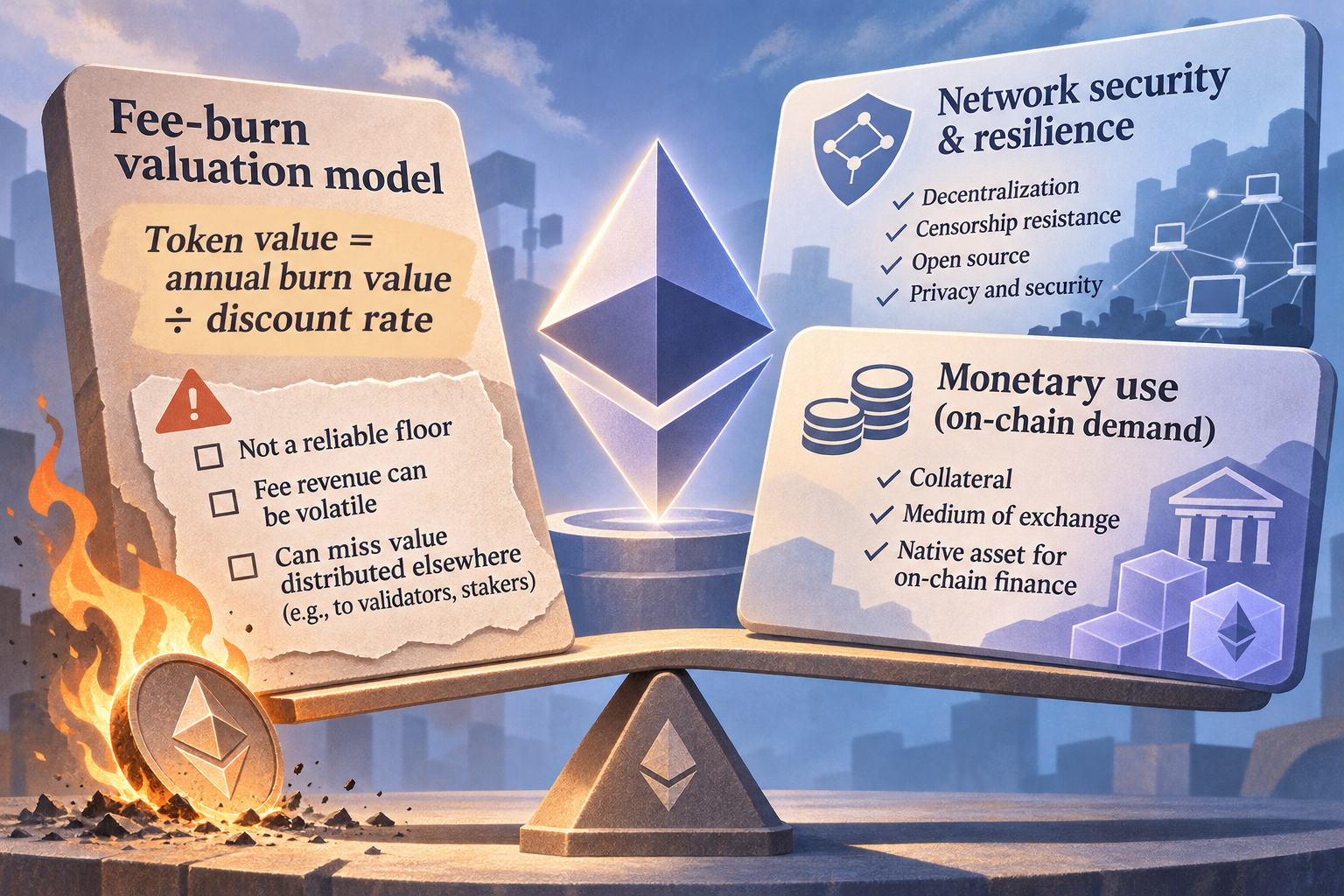
Buterin also revisited a valuation shortcut: divide the annual dollar value of token burns by a discount rate. At a steady $1 billion in annual burns and a 4% rate, it produces a theoretical value of $25 billion. The weakness is the word steady.
Odaily reported that Ethereum burned about 1.48 million ETH, worth roughly $3.6 billion, in 2022. From the start of 2026 through November 8, it reported burns of only about 19,200 ETH, worth roughly $43 million. Annualizing the latter figure to about $50 million would put the same model’s theoretical value near $1.25 billion, against an ETH market capitalization of roughly $270 billion at the time—a gap of more than 200-fold. That gap illustrates the model’s limits; it does not establish a different fair value.
Burns also miss value distributed elsewhere. Solana priority fees go to validators, for example, while TRON resource rentals can benefit stakers. Neither payment necessarily appears as a token burn.
Buterin placed greater weight on Ethereum’s decentralization, censorship resistance, open-source nature, privacy and security. He suggested that systems able to operate reliably without control by one entity could become more valuable as AI develops. The report also raised the counterargument: ETH’s use as collateral, a medium of exchange and a native asset for on-chain finance may carry a monetary premium, but that premium is difficult to measure. Unlike BTC, ETH has no fixed supply cap, and its issuance rules can change through protocol upgrades. Lower burns therefore do not settle the valuation question; they make the assumptions behind any answer more visible.
Source: odaily.news (originally published 2026-11-11 20:30 UTC+8)