Originally reported by Cointelegraph on November 12, 2026, at 00:26 UTC+8, covering Wednesday’s US market open.
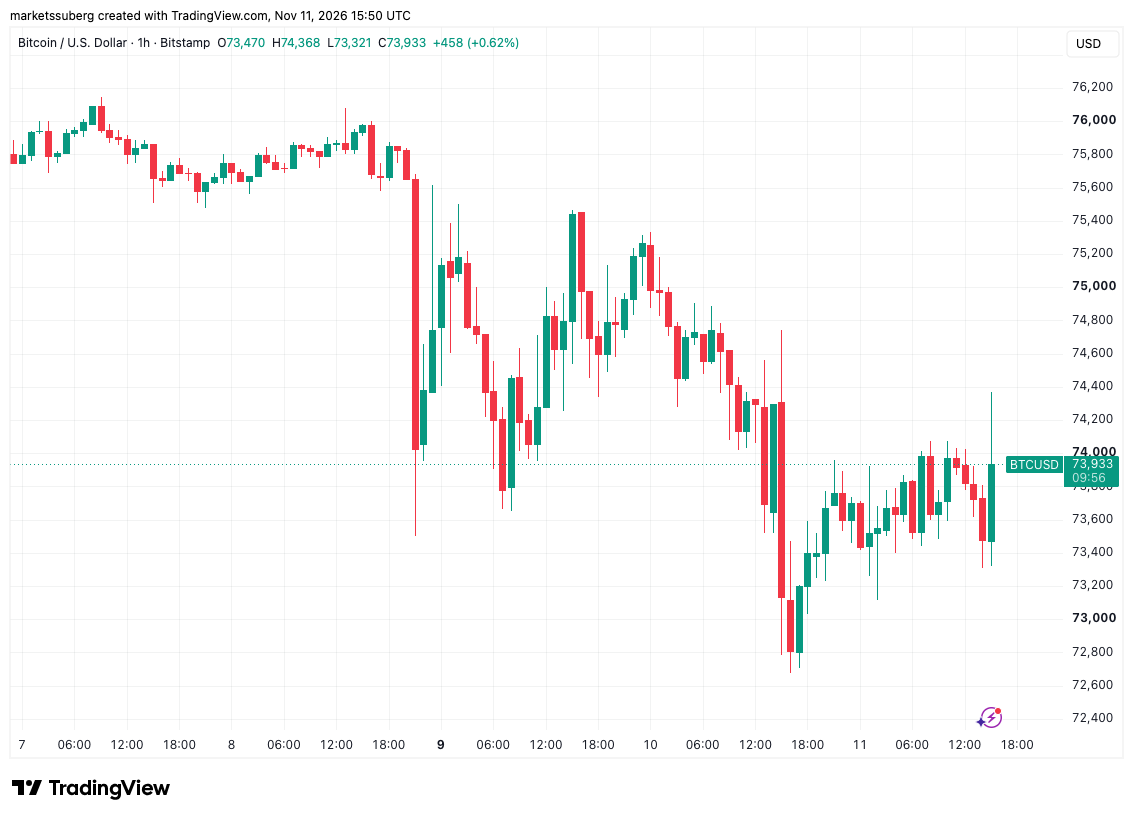
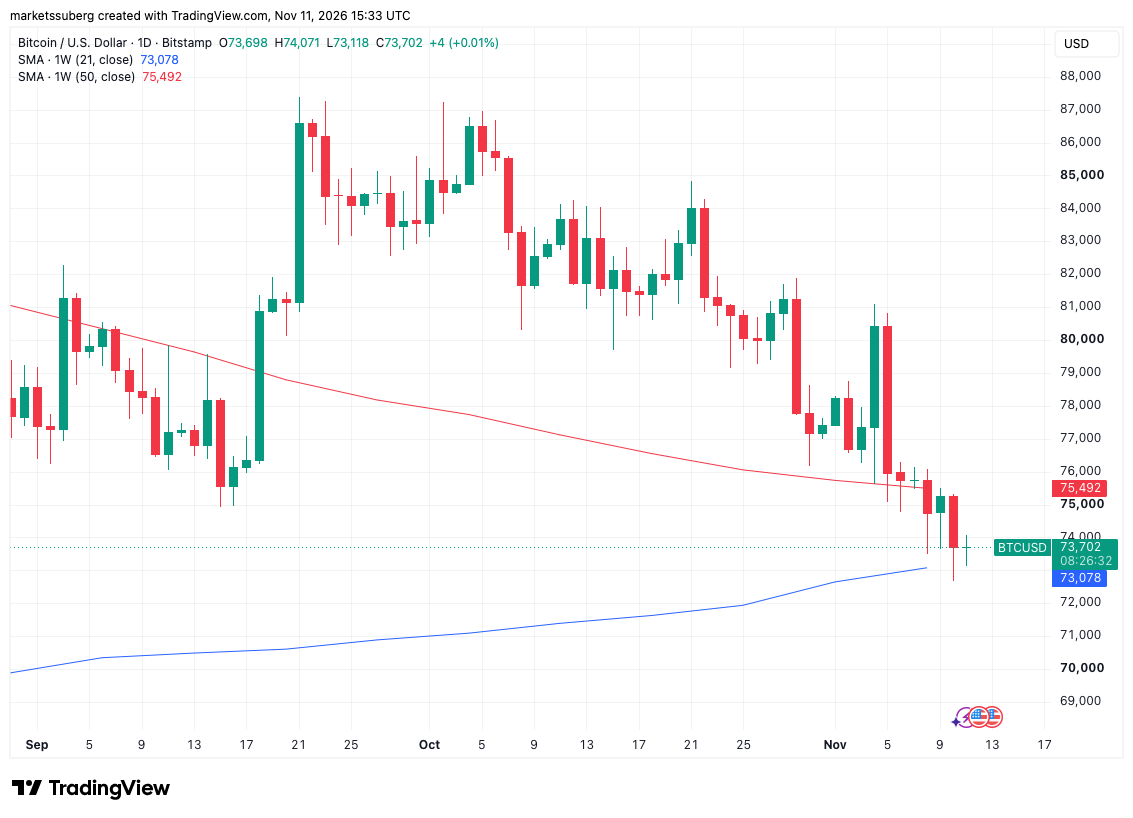
Bitcoin hovered near $74,000 at the November 11 Wall Street open, but did not follow US stocks higher. BTC traded between its 21-week simple moving average at $73,078 and its 50-week average at $75,492, according to Cointelegraph’s TradingView data.
Stocks rise; bond yields return to 5%
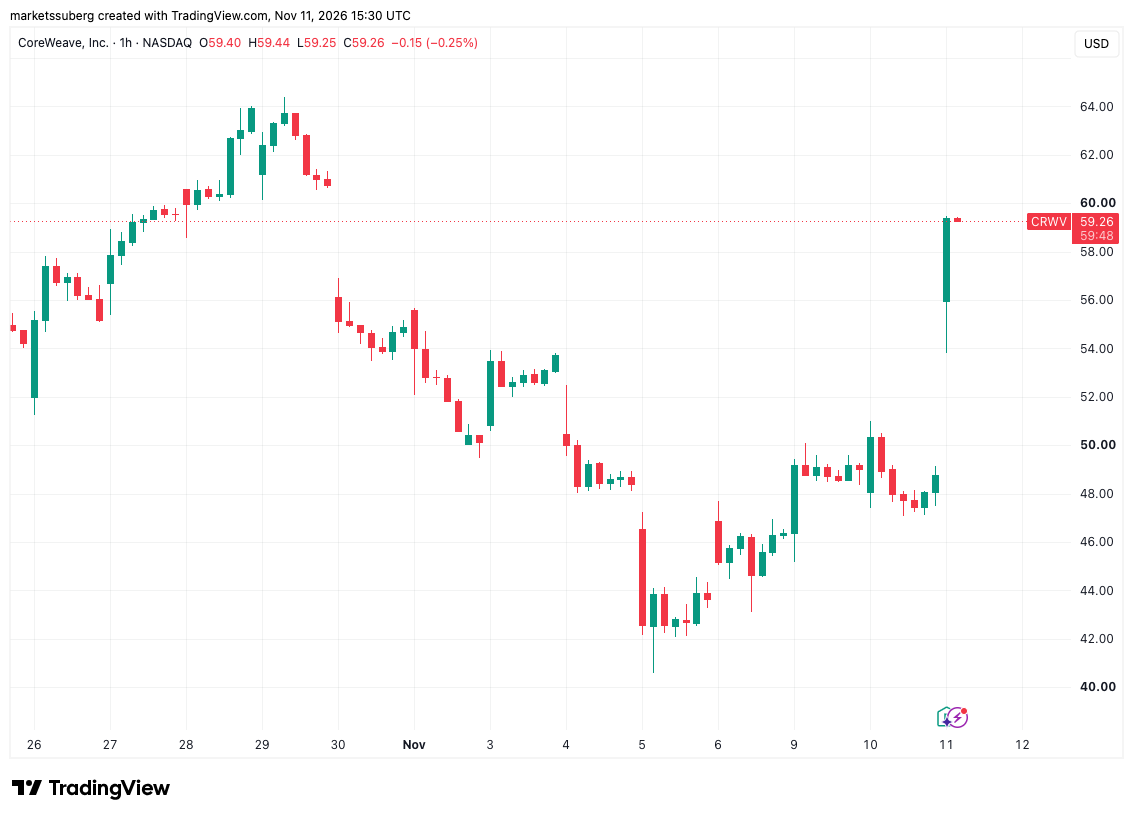
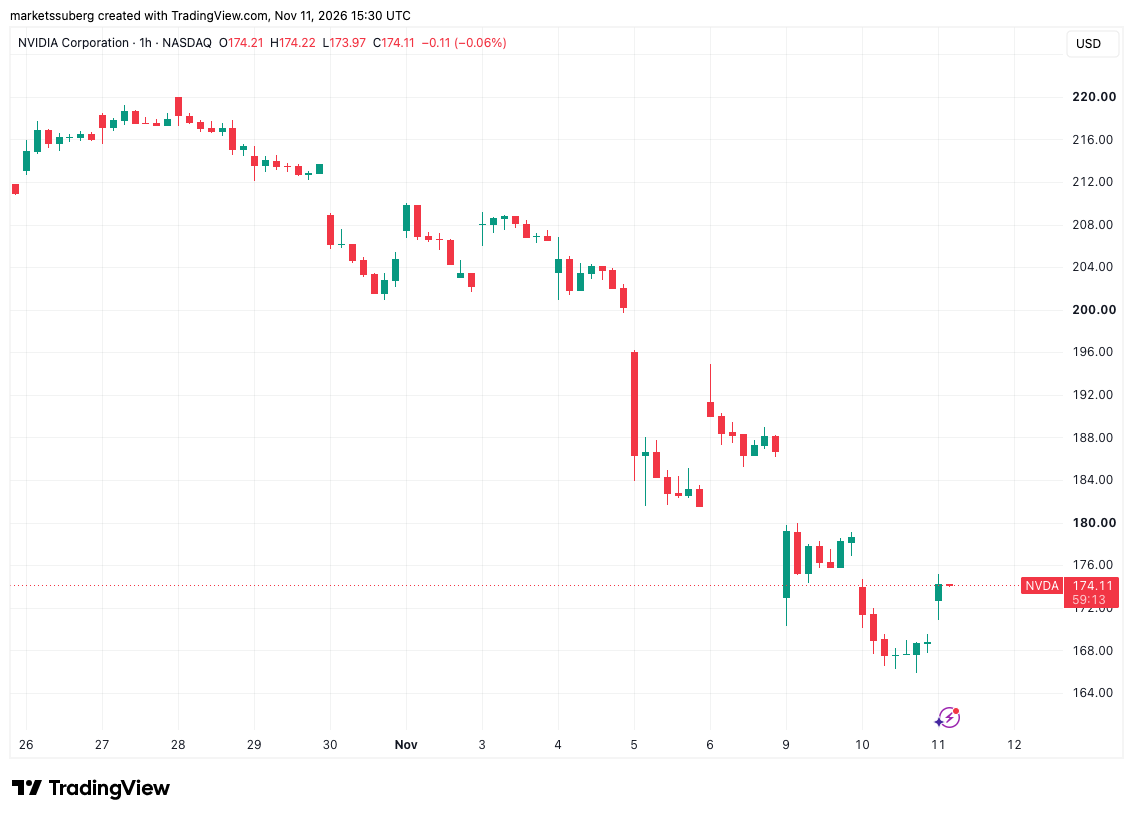
Tech stocks led the early equity gains. Cloud-computing company CoreWeave rose more than 20% after reporting third-quarter revenue above estimates and raising its 2026 guidance. Nvidia opened around 2.5% higher after declines on Monday and Tuesday amid controversy over CEO Jensen Huang.
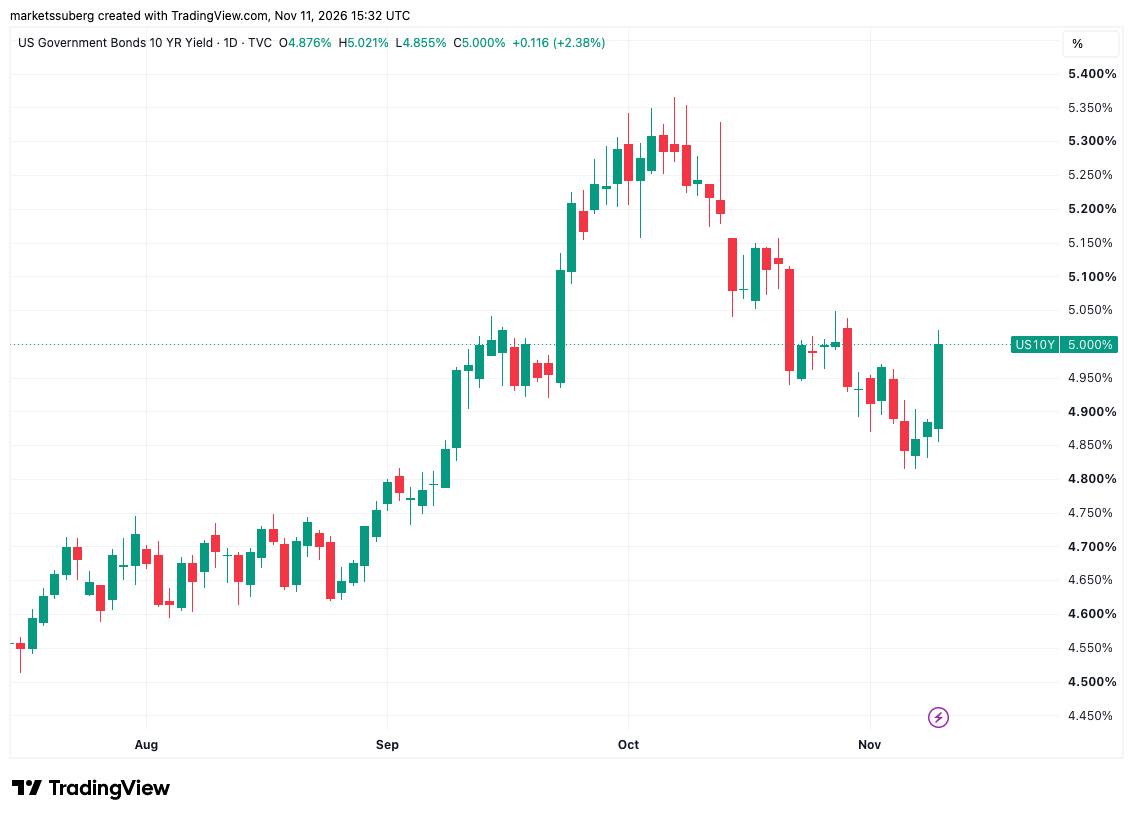
Stocks rose despite higher-than-expected US Consumer Price Index data released Tuesday. The US 10-year Treasury yield reached 5.02% on Wednesday, returning to 5% for the first time since October 29. The 30-year yield rose as high as 5.378%, a level last seen on October 22.
Peter Boockvar, chief investment officer at One Point BFG Wealth Partners, told CNBC that bonds were pricing in a more hawkish Federal Reserve. Cointelegraph reported that markets had priced in a 0.25% December rate hike, while the odds of a 0.5% move were increasing. Those were market expectations, not announced Fed decisions.
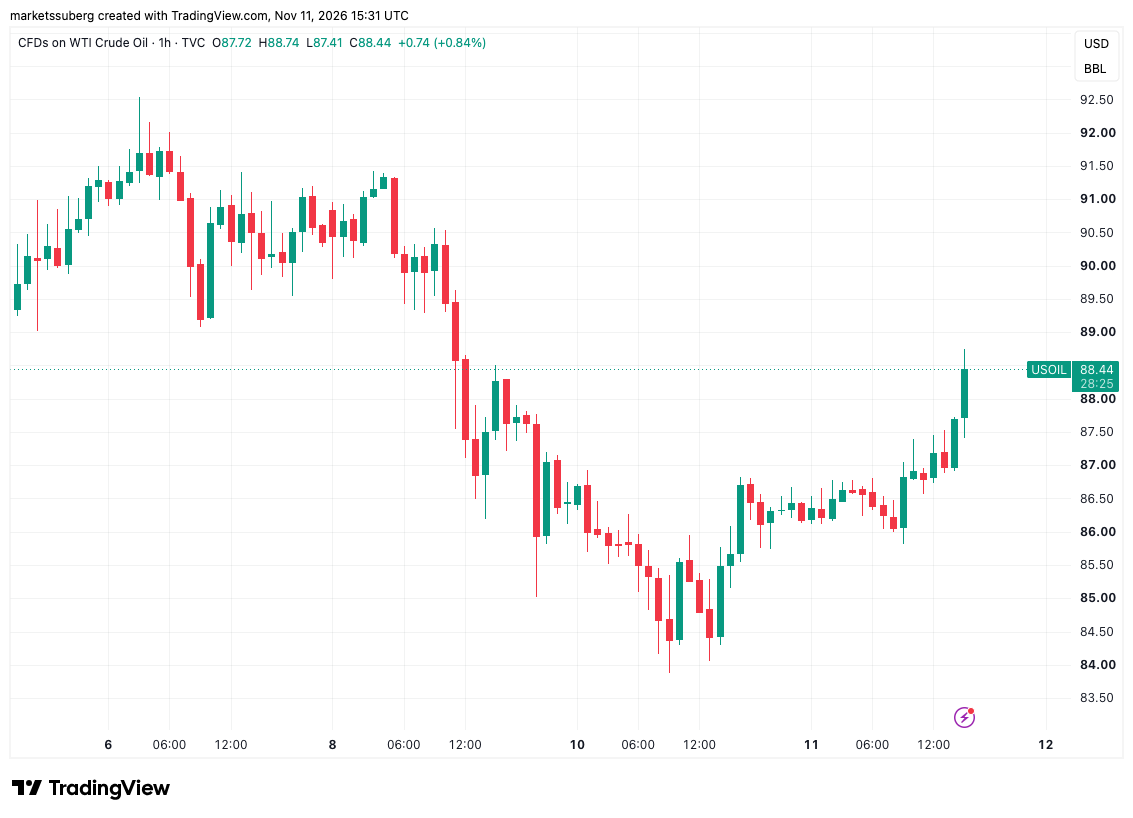
Oil also rose as optimism faded over a diplomatic solution to the US-Iran war. With attacks on ships in the Strait of Hormuz continuing, LSEG Oil Research cautioned that even a deal would leave practical obstacles to restoring traffic, including mine clearance, insurance costs and shipowners’ willingness to take the risk, according to Reuters. US WTI crude rose 1.4% to $87.70 a barrel after touching $84 on Tuesday, while Brent gained 1.5% to $93.40.
Bitcoin’s range and holder risk
Bitcoin’s volatility cooled as traders awaited another catalyst after the CPI report. Cointelegraph reported that BTC had lost support around $75,700, the aggregate cost basis of short-term holders—holders who had kept their BTC for up to 155 days. On Tuesday, short-term-holder wallets sent more than 47,000 BTC to exchanges at an unrealized loss. Those transfers could signal increased panic selling if the coins were sold; the transfers alone do not establish that sales occurred.
Source: cointelegraph.com (originally published 2026-11-12 00:26 UTC+8)