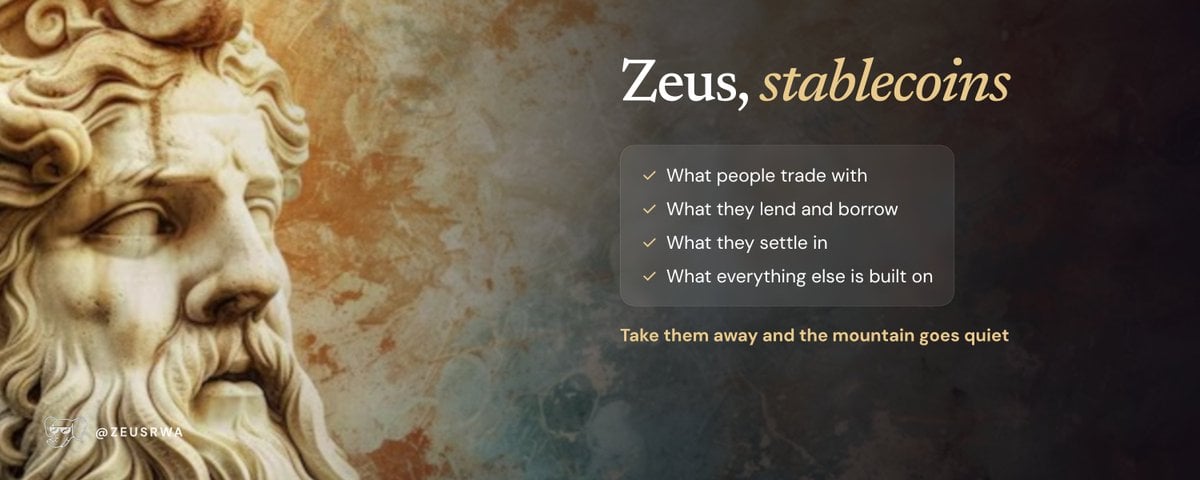
Putting a share onchain and giving its holder a market to sell it in are two different achievements. In a November 27, 2026 essay, the writer Zeus uses the Greek pantheon to explain the distinction. Stablecoins take the throne because people use them to trade, lend, post collateral and settle transactions. But even Zeus needs Poseidon: without a deep market, a tokenized asset is a ship on dry land.
Moving money is not the same as finding a buyer
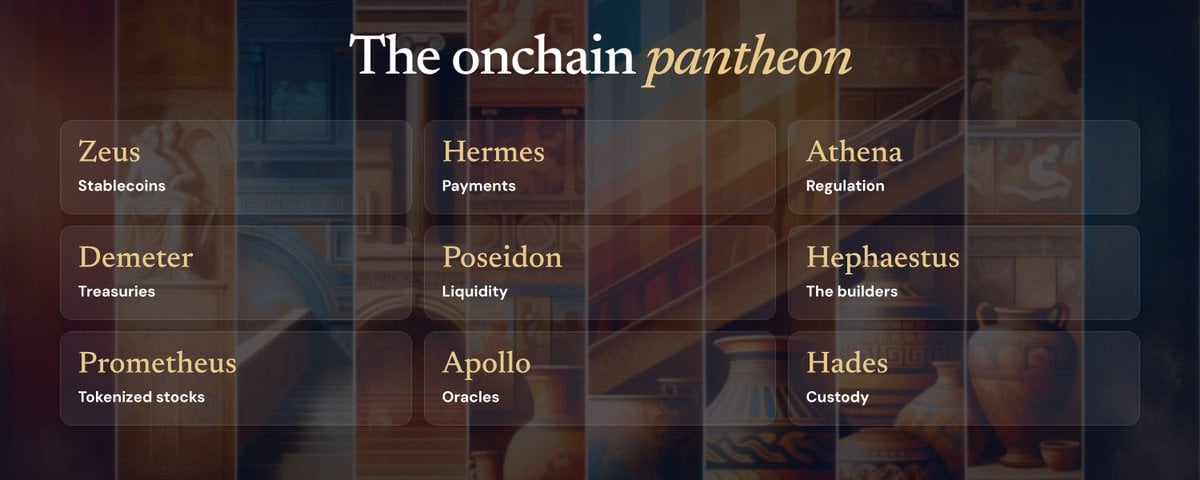
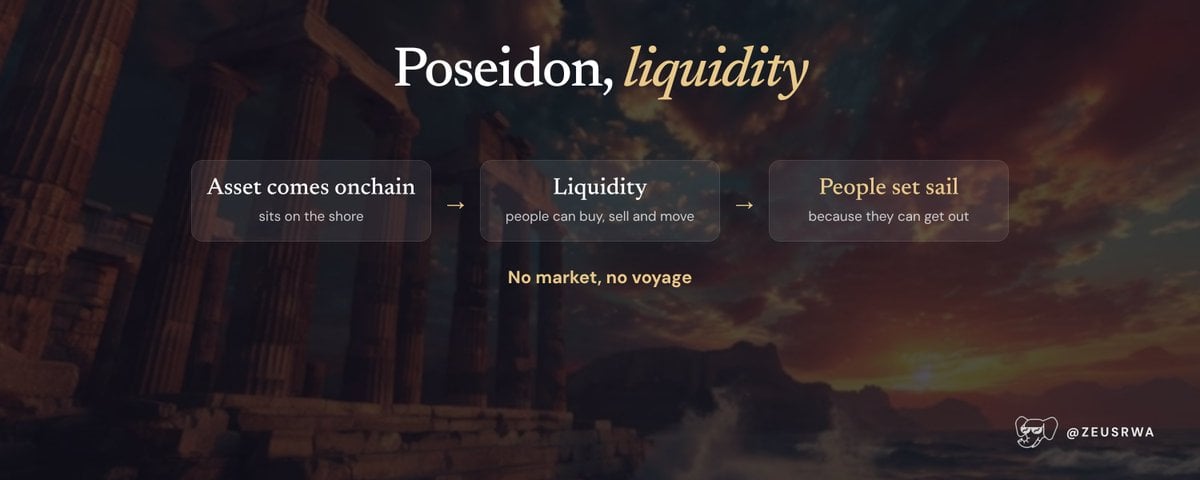
Hermes, the messenger, stands for payments and clearing. A traditional cross-border remittance can take days and incur fees at several intermediaries. Onchain payments can move money across borders, between applications and across networks without waiting for a bank to open. Poseidon represents a different capability: liquidity. The ability to transfer a token does not mean there will be someone ready to buy it when its holder wants to sell.
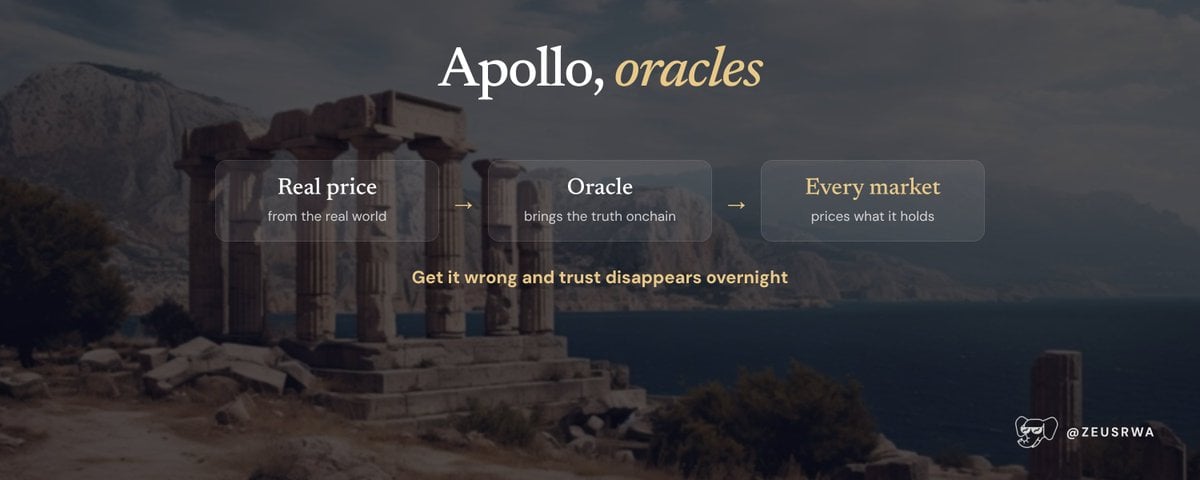
Apollo, the god associated with the oracle at Delphi, supplies another distinction. A price feed tells an application what an underlying asset is worth; it does not supply a buyer. An accurate feed rarely attracts notice. A bad price, though, can trigger a liquidation that should never have happened or give a fund the wrong net asset value.
What a wallet holds, and what backs it
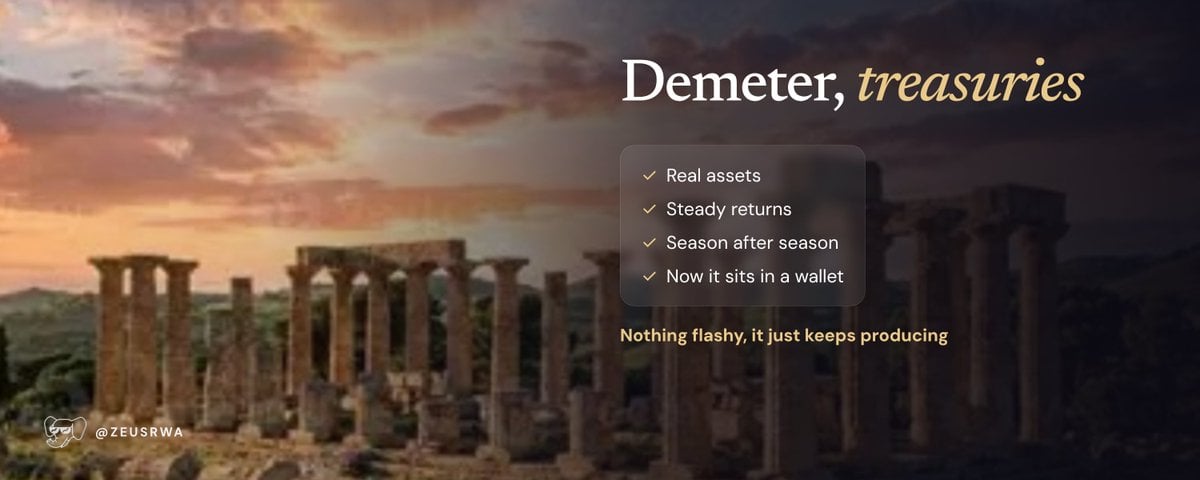
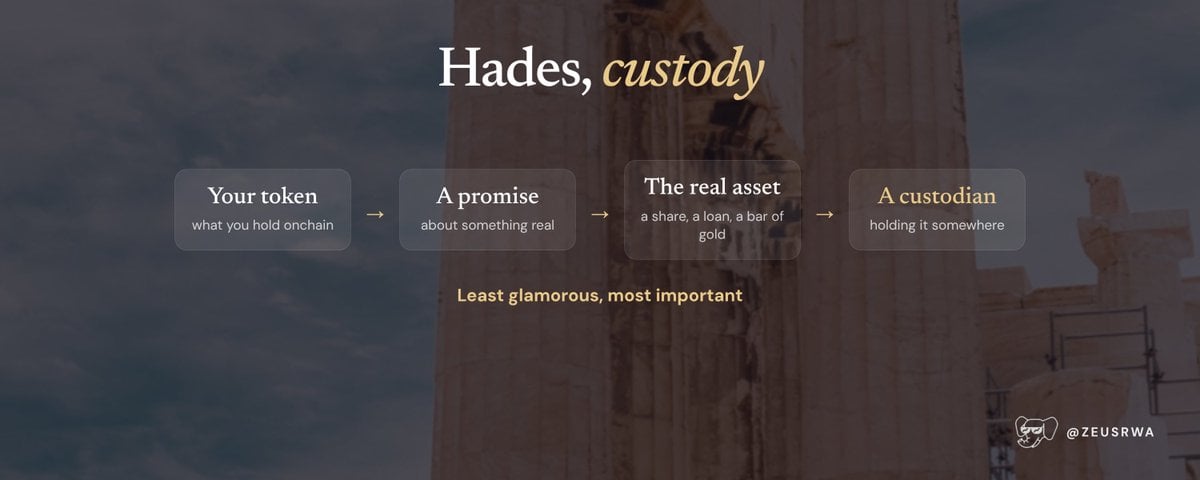
Demeter’s harvest represents income from real-world assets such as sovereign debt and funds. Tokenization can make that income accessible through a wallet, but the yield still comes from the underlying investment. Hades, who guards the wealth beneath the earth, represents custody. When a token stands for a share, a loan or physical gold, someone must safeguard the asset behind the claim.
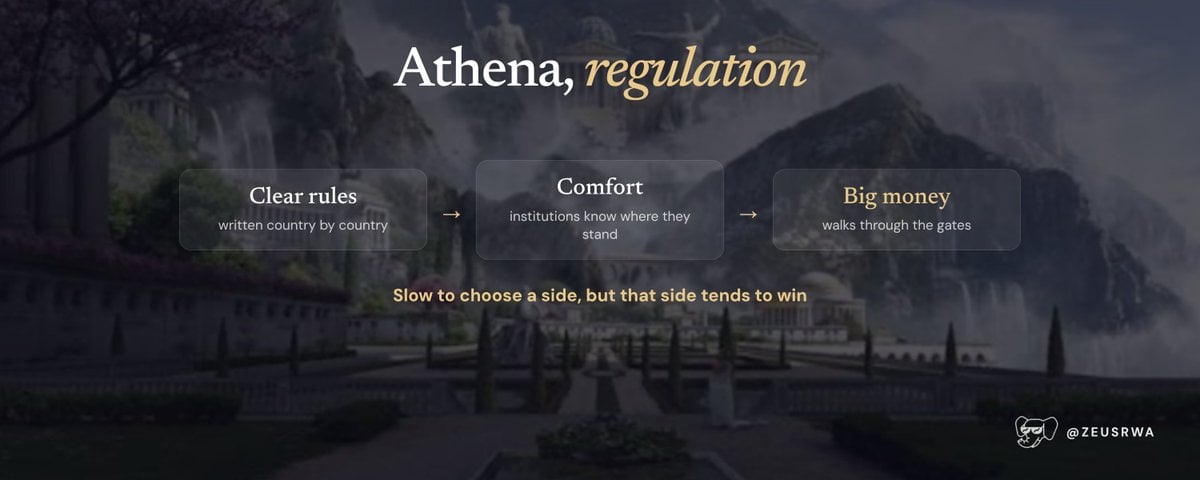
Prometheus’s gift of fire illustrates the case for tokenized U.S. stocks: a smartphone and wallet could broaden access for people otherwise constrained by geography, brokerage eligibility or exchange hours. Athena represents compliance. Zeus argues that regulatory uncertainty long kept large institutions on the sidelines and that, as countries began putting rules in writing, some institutions began to participate. That is an argument about institutional access, not a claim that every stock token is available to every investor.
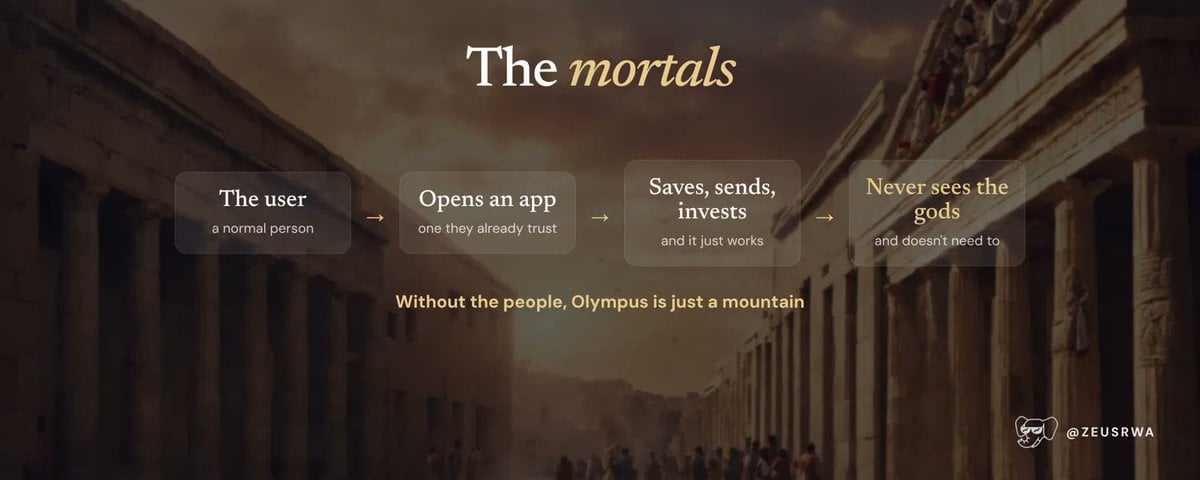
The user need not know the pantheon
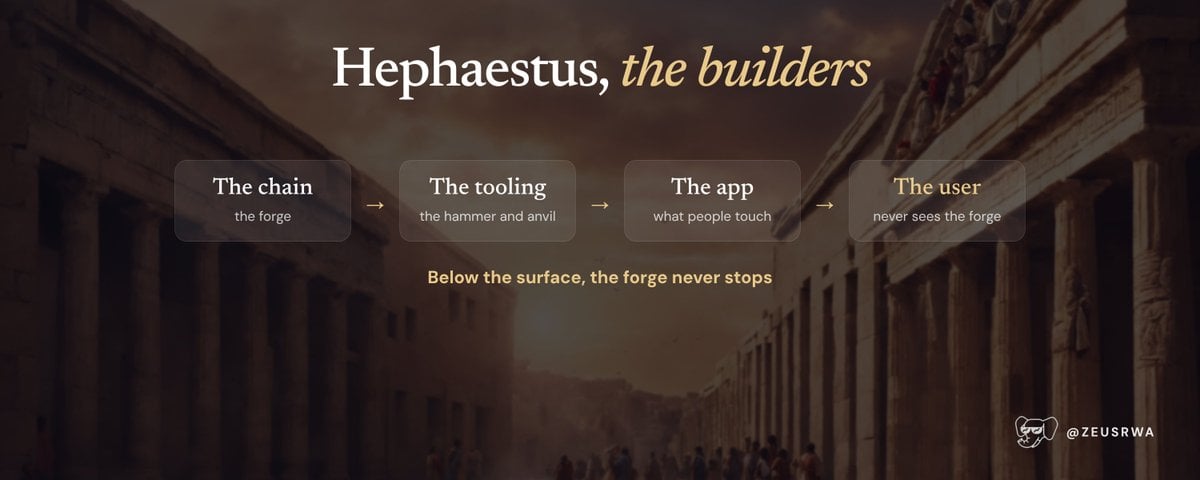
Hephaestus, the smith, stands for the people who build base-layer blockchains, developer tools and the infrastructure beneath an app. Their work is easiest to overlook when it works well.
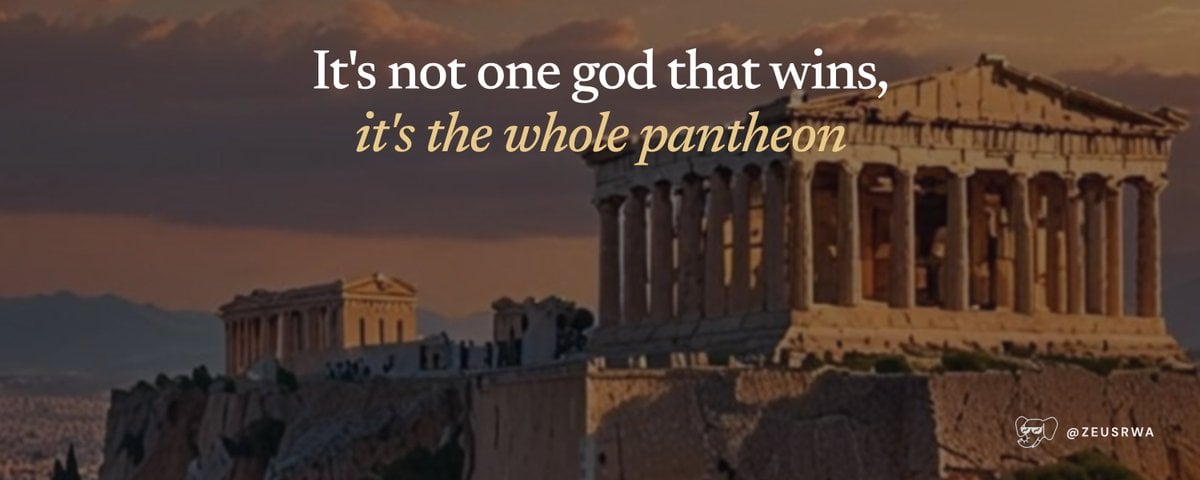
For Zeus, the test of adoption belongs to the mortals. Someone opening an app to save, send money or invest should not have to identify the network that carries a payment or the oracle that values a position. The point of the pantheon is not to crown a winning protocol. It is to explain how many distinct jobs must be done well before an ordinary financial task feels simple.