
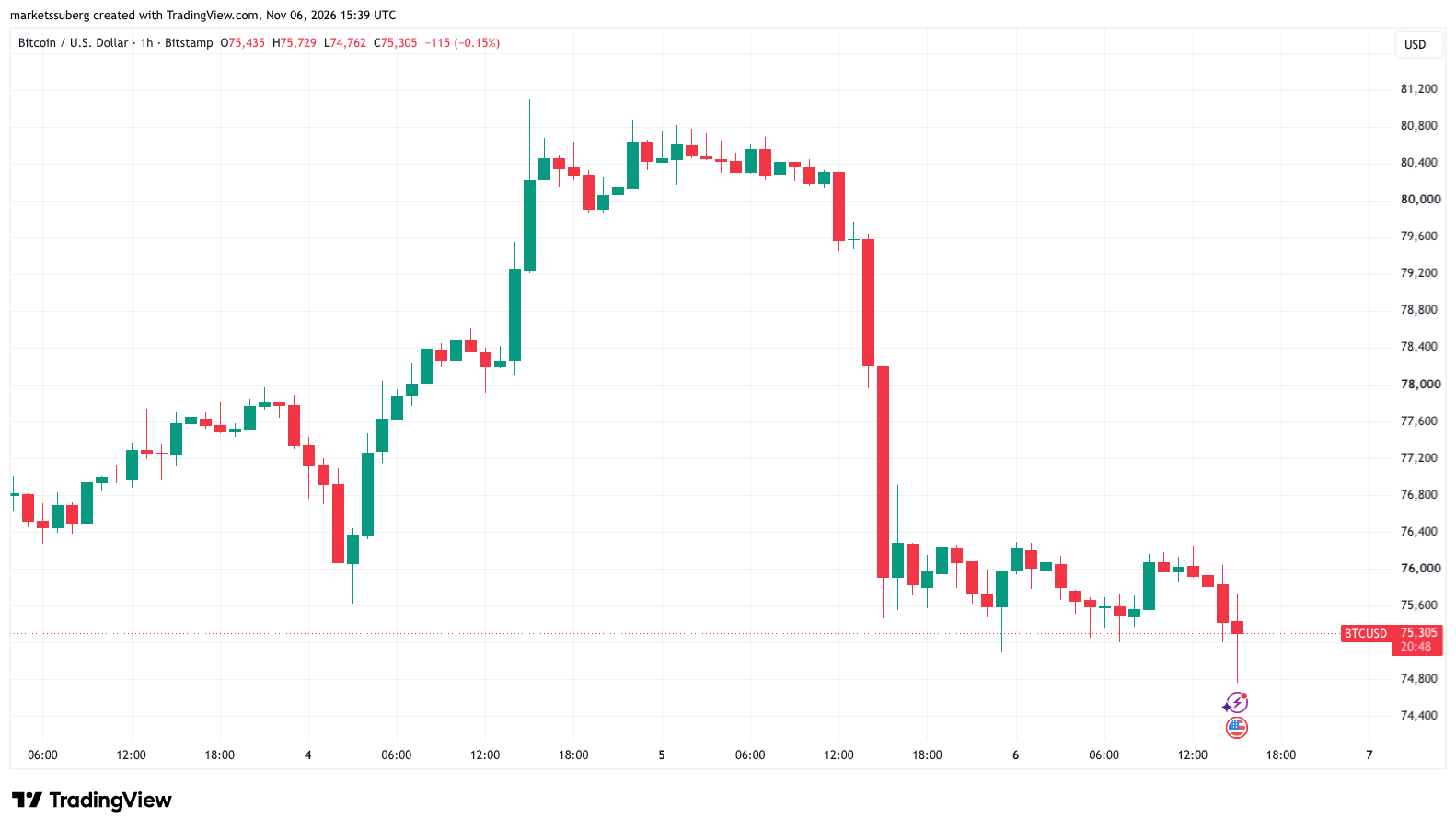
As reported on Nov. 7, 2026 (UTC+8), Bitcoin fell to $74,762 after the Nov. 6 Wall Street open—its lowest level since Aug. 21. The total crypto market capitalization was down 0.5% on the day, even as US tech stocks rebounded from the previous session’s sell-off.
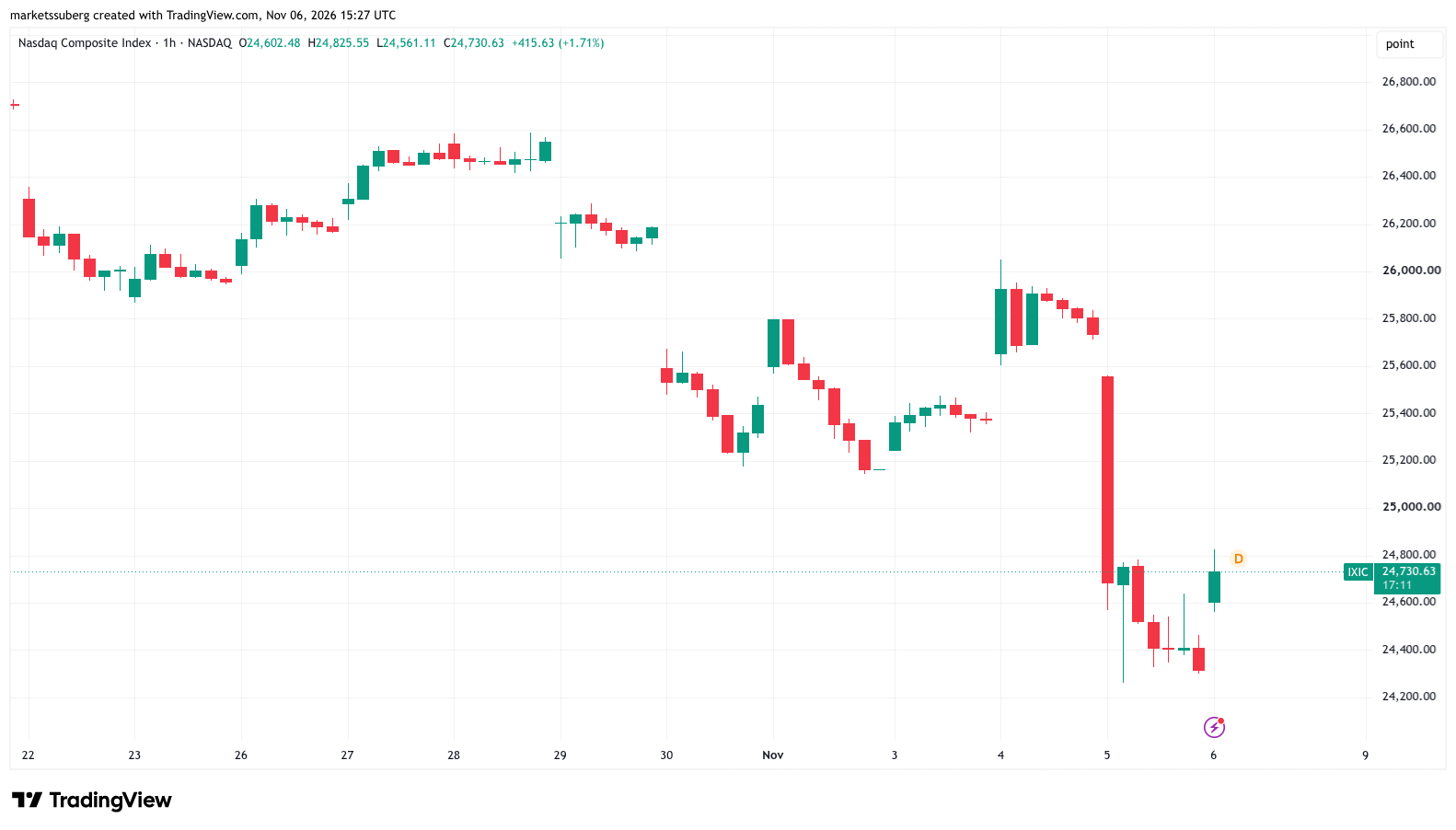
The Nasdaq Composite gained 1.8% in the first hour of trading. At the time of the report, it was up 1.2%, while the S&P 500 was up 0.6%. SanDisk and Micron Technologies were each up 6.3%. The moves showed a divergence between Bitcoin and stocks that day, not why Bitcoin fell.
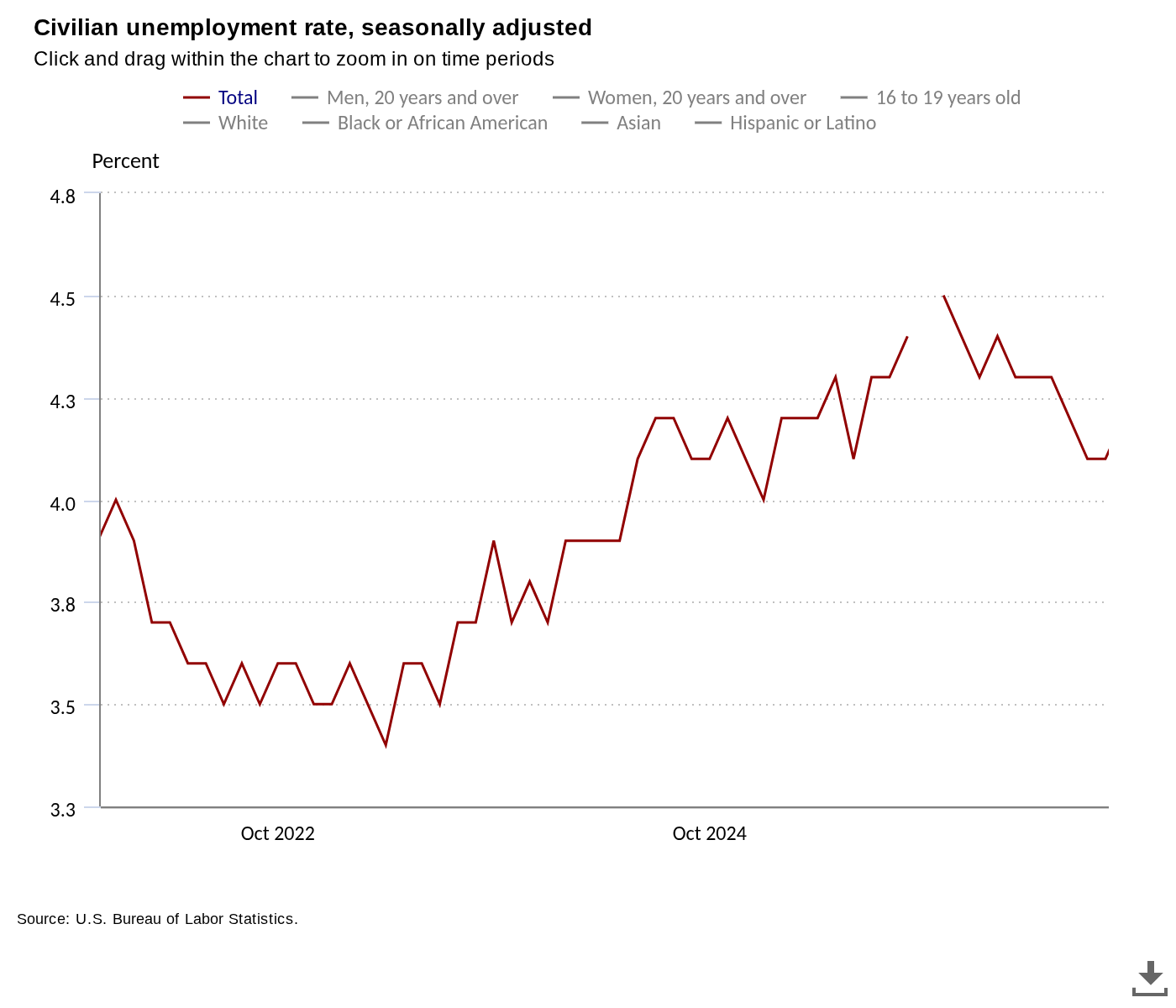
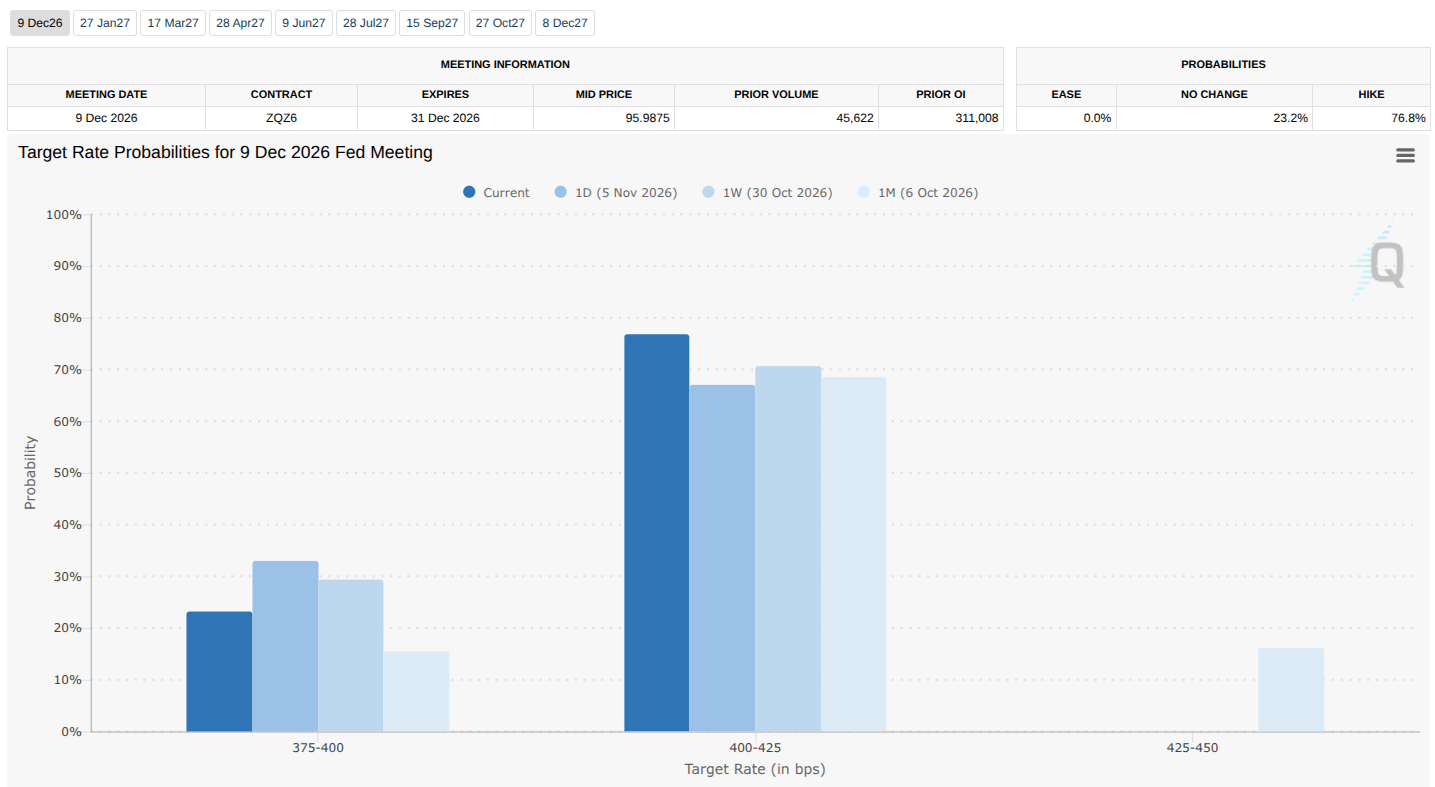
Friday’s US employment report showed 165,000 jobs added in October, above expectations of 65,000. September’s figure was revised from 29,000 to 60,000, and the unemployment rate was 4.1%, against a forecast of 4.2%. Stronger labor data can weigh on risk assets if it strengthens expectations of tighter monetary policy and reduced liquidity. CME Group FedWatch data showed the probability of a 25-basis-point Federal Reserve rate increase in December rising from 66.9% to 76.8% after the release. That shift did not establish the cause of Bitcoin’s decline.
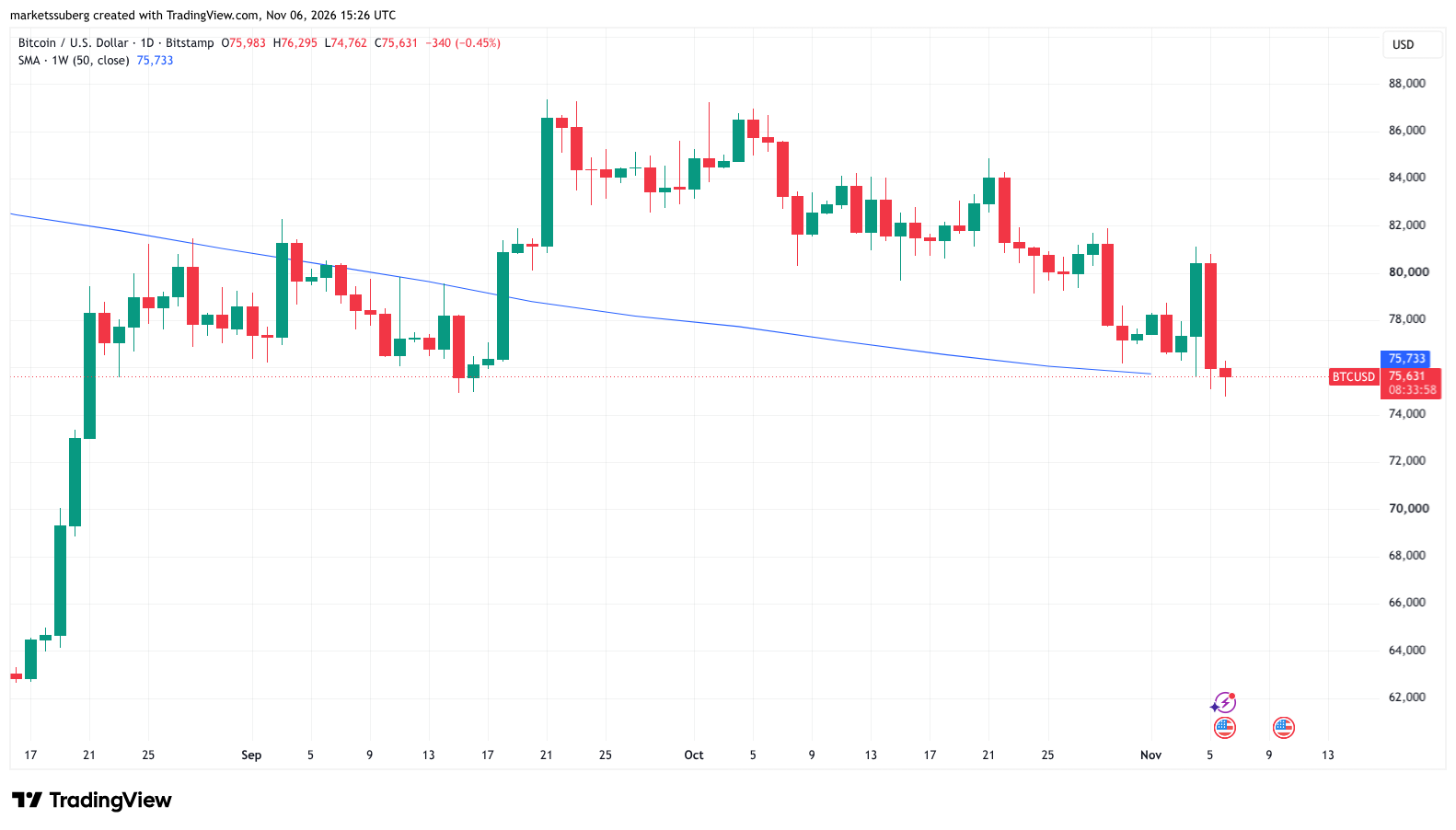
Bitcoin also tested its 50-week simple moving average, then around $77,533. Keith Alan, cofounder of Material Indicators, said the durability of that support could not be confirmed before the weekly candle closed. In his analysis, a failure of the area around $75,500 could leave room for a drop as low as $69,000. He said a recovery would require higher highs and higher lows on shorter time frames. Those were conditional scenarios, not confirmed outcomes.