
U.S. spot crypto ETFs recorded more than $540 million in net outflows on Thursday, November 5, 2026, according to The Block’s November 6 report. The withdrawals came as crypto and U.S. equities fell after initial market gains following Tuesday’s midterm elections. The timing does not, by itself, establish what drove the ETF flows.
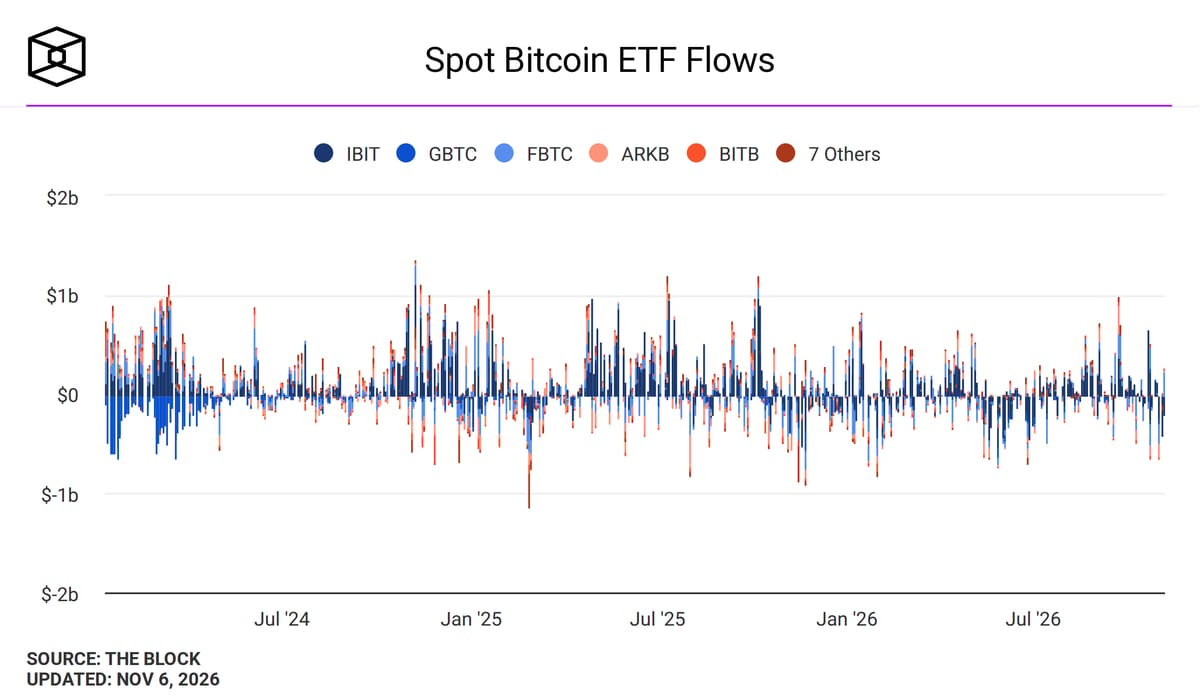
Fidelity’s FBTC led the reported bitcoin ETF outflows at $199.9 million, followed by BlackRock’s IBIT at $105 million and Grayscale’s GBTC at $49.9 million. The Block said Franklin Templeton’s EZBC, VanEck’s HODL and Ark Invest’s ARKB also had net outflows; the remaining bitcoin ETFs it tracked recorded zero flows.
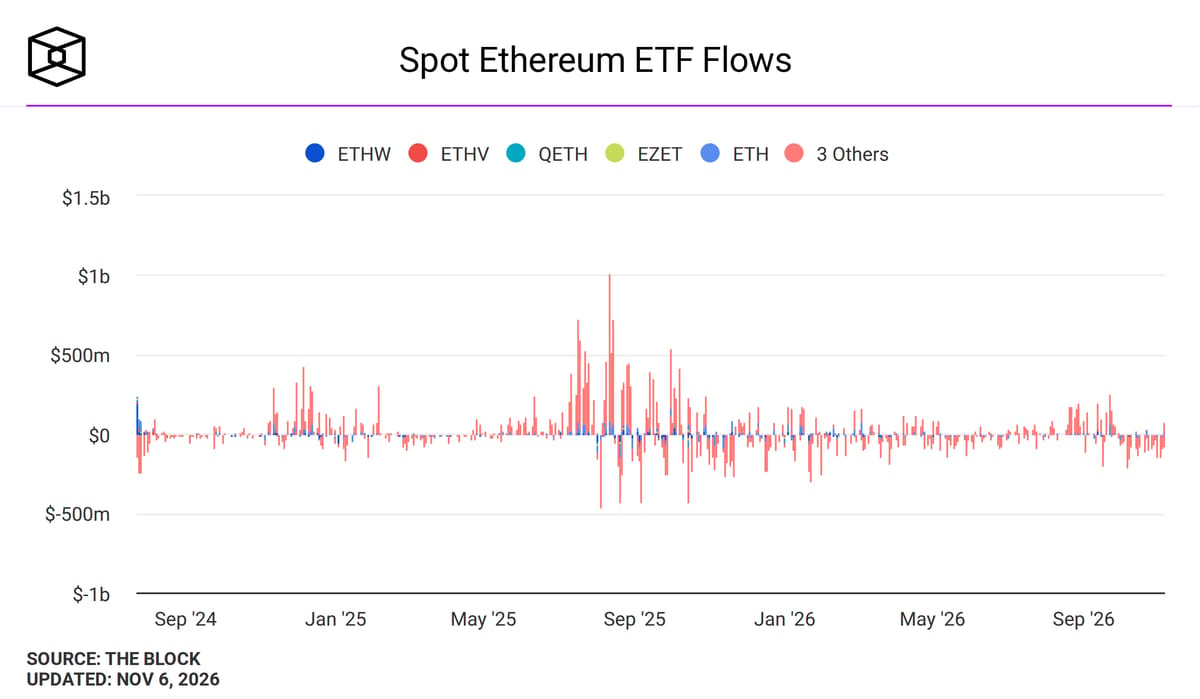
The report also described outflows from Ethereum funds, led by BlackRock’s ETHA and ETHB. Its stated figures of $75.2 billion and $22 billion, respectively, conflict with its reported daily total of more than $540 million across major crypto ETFs. Those Ethereum fund figures should not be treated as reconciled. The report said Fidelity’s FETH and Grayscale’s ETHE also had outflows.
For other products, SoSoValue data cited in the report showed combined daily net outflows of $1.2 million from U.S. Solana ETFs, $11 million from Zcash ETFs and $3 million from Hyperliquid ETFs. XRP ETFs recorded zero flows. The Block put combined net outflows from major U.S. crypto ETFs at more than $1.1 billion for the week to that point.
Crypto and stocks fall together
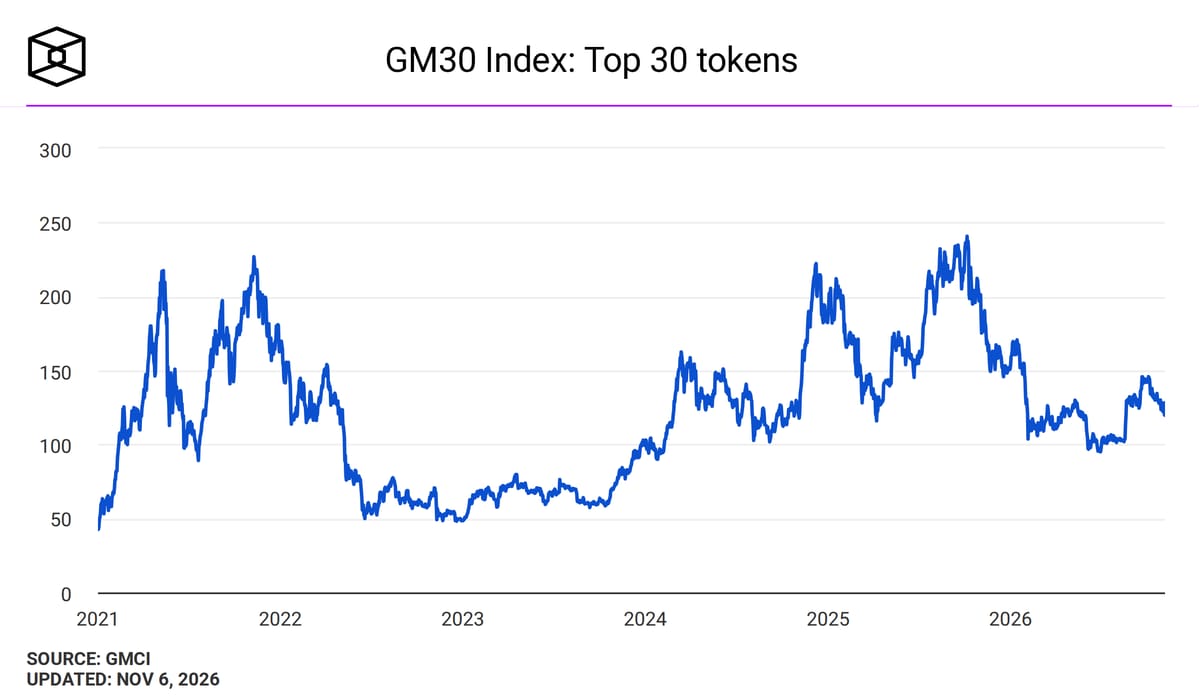
Bitcoin fell 5.6% on Thursday, more than reversing its initial 4% gain on Wednesday, the report said. Ether dropped 7.8%, while the GMCI 30 index fell 6.4%. The Nasdaq Composite declined 5.5% and the S&P 500 fell 4.4%.

Kyle Rodda of Capital.com attributed part of the pressure on technology stocks to concerns about the AI investment boom and potential policy restrictions after Democrats swept both chambers of Congress. IG’s Axel Rudolph told The Block that bitcoin had been caught in a broader retreat from technology and crypto risk. He also cited more than $1 billion in leveraged crypto positions liquidated over 24 hours. Those assessments offer possible explanations for the selloff, not proof that any single factor caused it.
At the time of the November 6 report, Capital.com’s Daniela Hathorn said economists expected roughly 60,000 to 65,000 new jobs in Friday’s U.S. employment report. She warned that stronger employment and wage figures could lift Treasury yields and the dollar. Bitwise’s André Dragosch offered a different outlook: he expected bitcoin to outperform U.S. equities as the AI trade unwound, arguing that bitcoin had become more sensitive to the dollar and monetary-policy expectations than to economic growth. That was a forecast, not an observed decoupling.